Introduction: Why Whales Are More Than Just Giants of the Sea
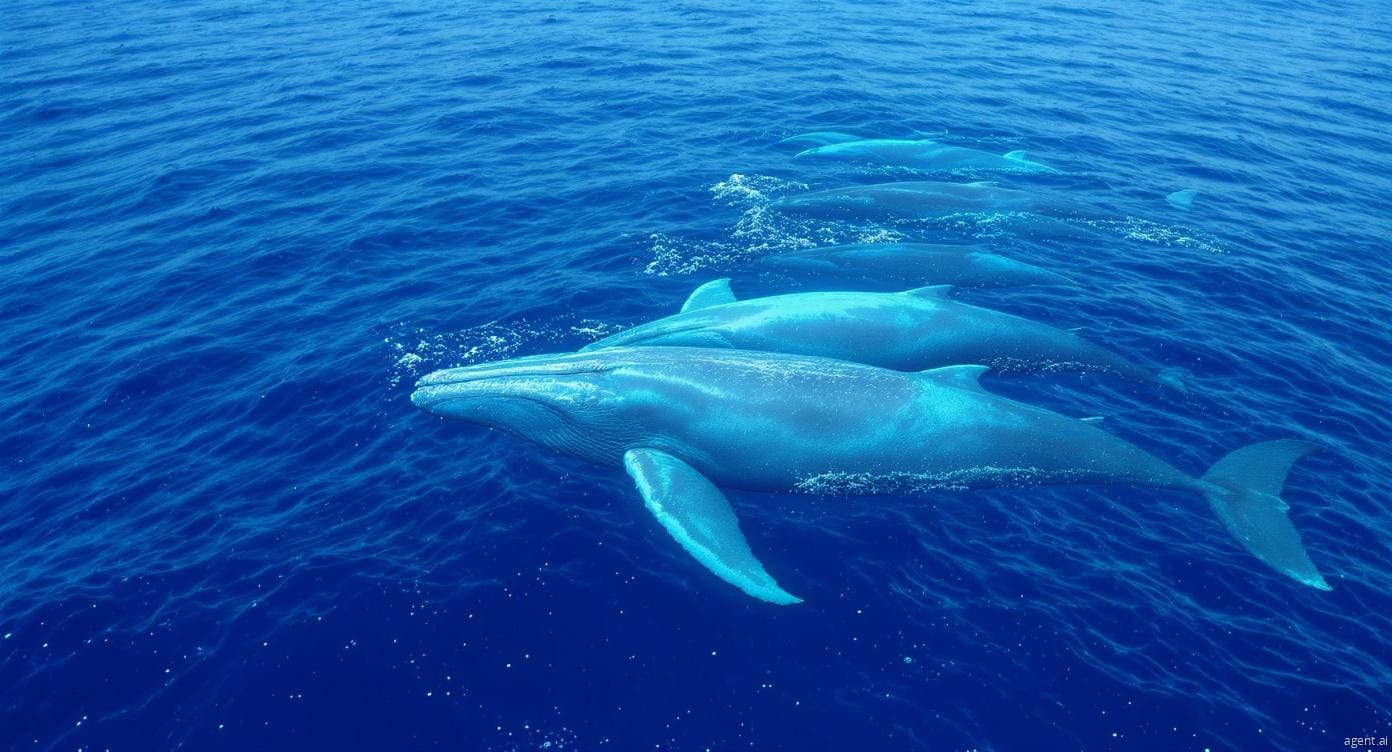
The whale is not just the biggest animal on Earth, it is one of the most intelligent, emotional, and deeply mysterious creatures ever discovered. For centuries, humans have been fascinated by whales, their songs, their immense size, their epic migration journeys that span thousands of miles, and their remarkable family bonds.
But while whales inspire awe around the world, there are also shocking truths hiding beneath the surface about their behavior, intelligence, and the threats they quietly face each day.
In this article, you’ll discover:
- 10 inspiring whale facts that will fill you with wonder
- 5 shocking whale truths that will leave you speechless
- Rare scientific discoveries
- Emotional real-world stories
- Behavior patterns scientists still struggle to explain
Also Read: Giant Panda: 11 Shocking Truths About This Cute but Endangered Icon
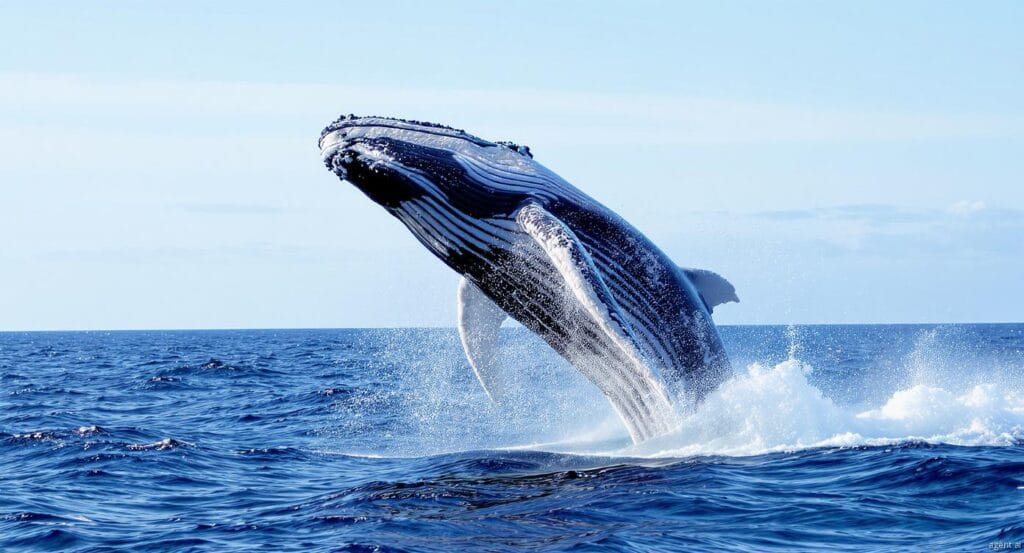
Let’s dive deep into a world more magical, mysterious, and powerful than any ocean myth.
1. “These ocean giants have ‘super-brains’ bigger and more complex than humans.”
Most people know that ocean giants are big.
But very few know that some whales have the largest brain ever present in any animal, even larger than humans.
For example:
- The sperm whale has a brain that weighs 8 kilograms (human brain = 1.3 kg).
- Whales have more neocortical neurons in some regions related to emotional intelligence.
Why this is inspiring:
- They mourn their dead.
- They form lifelong friendships.
- They teach their young advanced skills.
- They even have “culture” groups with shared traditions.
Scientists believe whales could rival elephants in social intelligence and may even surpass many primates.
“At the same time, detailed studies like Whale behavior research by National Geographic reveal how complex their brain activity truly is.”
2. Whale Songs Can Travel More Than 4,000 Kilometers
Imagine singing a song in India and someone in Africa hearing it instantly without any technology at all. That’s exactly what these marine giants can achieve.
Species like the blue giant and the humpback are especially known for this ability.
Their powerful calls can travel:
- 4,000 km across the ocean
- At frequencies humans can’t hear
- Through deep-water sound channels
Why this inspires:
These marine giants communicate through long, complex sounds that travel incredible distances across the ocean.
Some researchers believe their calls can even sync together like global choirs, forming one of the largest natural acoustic networks on the planet.
Their vocal patterns shift with seasons, moods, and social groups, almost like an underwater language.
Every tune carries meaning—signals of identity, location, and emotion.
Young ones learn these sound patterns the same way human children learn speech.
And entire populations can share melodies that last for generations.
3. Whales Create “Something” That Feeds the Entire Ocean
Long, intricate sound patterns that may travel incredible distances underwater are used by these ocean giants to communicate.
According to some researchers, their sounds might even synchronize across geographical boundaries, forming a natural choir that spans entire oceans.
Like a language formed by the ocean itself, their vocal rhythms change with the seasons, their emotional condition, and the groups they travel with.
Whether it’s communicating identity, indicating location, or conveying emotion, every sound has a purpose.
Similar to how human infants learn to speak, young calves pick up these sound patterns.
These common tunes are also passed down over the centuries in many communities, developing into deeply ingrained cultural traditions.
This waste:
- Feeds plankton
- Grows fish populations
- Supports coral reefs
- Helps produce oxygen
Yes, whales help create the oxygen we breathe.
Removing whales = damaging the planet’s oxygen cycle.
4. The Blue Whale’s Heart Is the Size of a Small Car
- It weighs about 180 kg.
- Its heartbeat can be heard from 2 miles away.
- Every beat pumps gallons of blood.
Yet, despite this giant size…
The blue whale eats tiny krill.
This contrast makes the whale world even more magical.
Also Read: 10 Mind-Blowing Facts About Whale Communication: Why It May Be Smarter Than Dogs & Cats
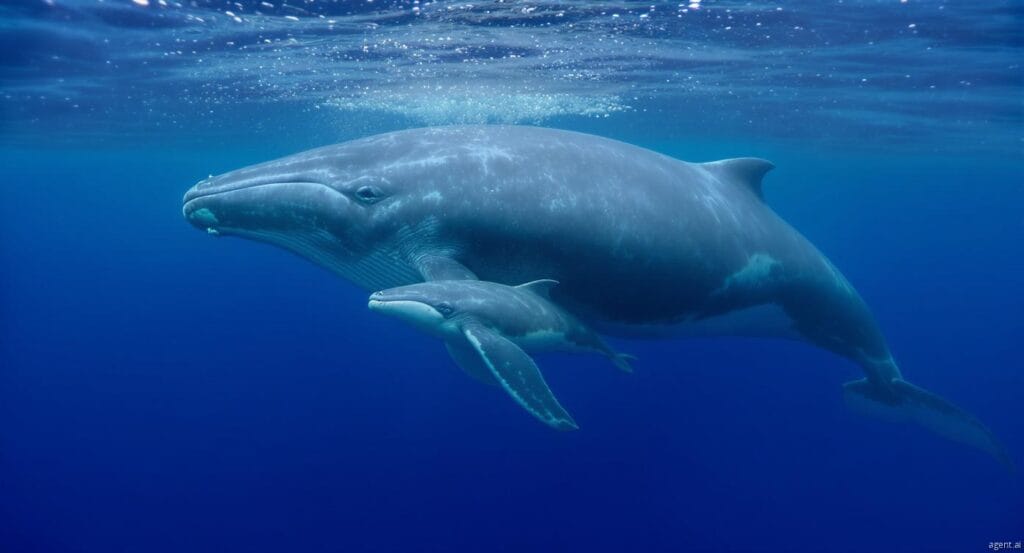
5. Baby Whales Gain 90 Kilograms Every Single Day
Whale milk is one of the richest in the world.
A baby blue drink:
- 600 litres of milk per day
- 35% fat-rich milk
- Enough energy to grow 90 kg daily
This is the fastest growth rate in the animal kingdom.
6. Whales Form Deep Family Bonds and Lifelong Friendships
- Travel in family groups
- Communicate constantly
- Share food
- Teach their young
- Form alliances
- Sing together
- Play for hours
Mother whales nurse their young for more than a year and protect them fiercely. Some whales even adopt orphaned calves.
7. Humpback Whales Save Other Animals From Predators
This fact has shocked marine biologists: Humpback whales have been recorded saving:
- Seals
- Sea lions
- Even other whales
From orca attacks.
They position themselves between the predator and the victim, a behavior that suggests compassion not driven by survival instinct. This could be a sign of empathy.
8. Whales Travel Thousands of Kilometers Without Getting Lost
Whales migrate:
- From cold feeding grounds
- To warm breeding grounds
- And back
Covering up to 20,000 km per year.
How do they navigate?
Scientists believe they use
- Earth’s magnetic field
- Ocean currents
- Stars
- Deep sound waves
This is nature’s most advanced GPS.
“Scientists tracking whale routes through NOAA whale migration data say their journeys are among the longest in the animal kingdom.”
Also Read: Vaccines: 7 Shocking Truths About Pet Owners Who Refuse Them
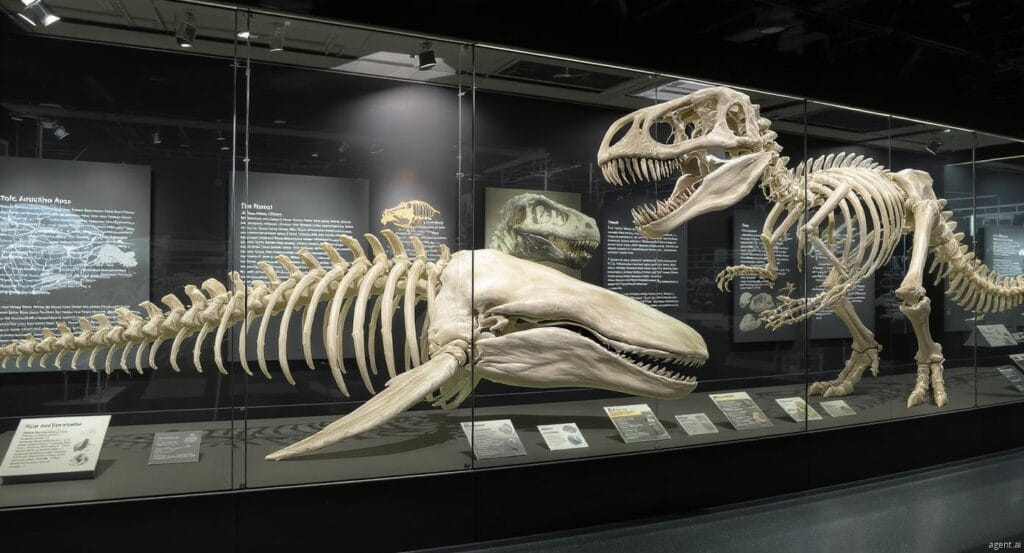
9. Whales Are Older Than Dinosaurs (Their Evolution Is 50 Million Years Old)
Yes, these giant ancestors once walked on land.
Millions of years ago, the ancestors of today’s ocean giants looked nothing like the sleek swimmers we know. They began as a dog-cat–shaped land animal called Pakicetus, a creature that roamed riversides and hunted on shore. Over countless generations, these early mammals gradually adapted to a fully aquatic life.
As climates shifted and ecosystems changed, these ancient animals developed stronger limbs for paddling, more streamlined bodies, and eventually powerful tails for deep-water movement. Their noses migrated upward to become blowholes, their hearing adapted to water, and their bodies grew massive to survive ocean pressures and long migrations.
This slow transformation, from a land-walking predator to a deep-diving marine giant, is one of evolution’s most extraordinary success stories. It shows how nature can reshape life itself when survival demands it.
This journey:
- Took 10 million+ years
- Produced some of Earth’s most advanced mammals
- Created ocean-dominant species that survive even today
Their evolutionary story is one of nature’s greatest masterpieces.
10. Some Species Live More Than 200 Years
The bowhead whale may live:
- 150–200 years
- Maybe longer
- Some still alive were born before electricity existed
They have:
- Anti-aging genes
- Strong DNA repair systems
- Slow cell aging
Studying whales may help humans understand longevity.
5 Shocking Marine Giant Facts (That Reveal the Dark Side of Their World)
1. Ocean Giant Deaths Go Under-Reported: 90% Are Never Found
Most Giants’ deaths happen:
- Deep underwater
- Far from humans
- Invisible to scientists
This means:
- Population decline is higher than we think
- Human activity caused many deaths
- The ocean hides most of the truth
A tragic fact:
Ship strikes alone kill thousands of these giants every year.
2. Some Whales Die From “Starvation” Because Humans Catch Their Food
Commercial fishing removes:
- Billions of fish
- Including krill, squid, and sardines
When their natural food sources disappear, these ocean giants begin to struggle for nourishment.
Every year, severely weakened individuals wash ashore, leaving researchers alarmed and heartbroken.
Creatures that have endured for millions of years are now facing a crisis created in just a few decades, driven largely by aggressive and unsustainable fishing practices.
3. Whale Songs Are Getting Louder, Because the Ocean Is Too Noisy
Noise pollution from:
- Ships
- Oil drilling
- Military sonar
This growing underwater noise forces these animals to raise their volume just to communicate with one another.
They’re essentially shouting across the ocean to stay connected.
But intense sonar blasts can:
- Disorient whales
- Damage their hearing
- Cause panic
- Lead to mass strandings
This is one of the most heartbreaking threats.
Also Read: Dog Trainer Warns: 5 Dog Breeds You Should Avoid | But Here’s the Twist!
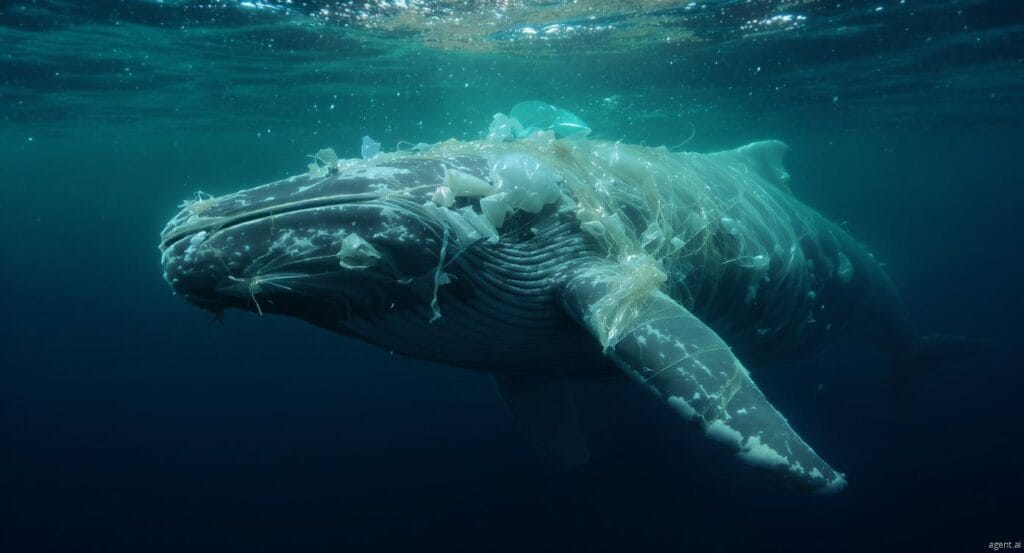
4. A Slow, Silent Killer: Marine Mammals Carry 40–80 Kilos of Plastic Inside.
Many dead whales have been found with:
- Plastic bags
- Fishing nets
- Metal
- Bottles
- Shoes
- Rope
- Plastic toys
A deep-sea necropsy once revealed 40 kg of plastic inside a massive ocean mammal. Another carried an unbelievable 88 kilos of trash.
The disturbing truth:
These gentle giants can’t process any of the debris they swallow. Their stomachs appear full, but the plastic blocks their ability to digest real food, leaving them weak, malnourished, and slowly starving despite having no space left to eat.
5. Some Giant Species May Go Completely Silent in 50 Years
Due to:
- Noise
- Low population
- Climate change
- Chemical pollution
- Loss of food
Ocean communication is changing fast, and researchers are growing increasingly concerned.
What was once a calm, acoustic world is now filled with noise that disrupts how these marine giants send and receive signals.
Scientists fear:
Their long-distance calls may no longer travel as far, social groups could lose contact, and entire migration patterns might shift if this acoustic disruption continues.
- Whale songs could disappear
- Whole “cultures” may vanish
- Knowledge passed through generations could be lost
Imagine an ocean where the deep sea falls completely silent.
Silent. Empty. Broken.
Conclusion: Why These Giants Deserve Our Urgent Attention
These ocean giants inspire us with their gentle nature, powerful songs that travel across seas, deep family bonds, and ancient history that predates human civilization. Yet the same awe comes with concern, because their future is more fragile than most people realize.
If they disappeared, marine ecosystems would collapse.
And without a healthy ocean, life on our planet cannot survive.Protecting these magnificent marine mammals is not optional, it’s a responsibility we all share.
“To understand how you can help, explore the WWF whale conservation report, which shares global efforts to protect these giants.”
FAQs
1. How do marine giants communicate?
Through low-frequency sounds and melodies that travel long distances.
2. Can their calls reach across oceans?
Yes, deep-water sound waves allow communication over thousands of kilometers.
3. Why do some species sing?
To attract mates, coordinate movement, and maintain social bonds.
4. What threatens them most today?
Noise pollution, climate impact, plastic waste, and reduced food availability.
5. How does plastic harm them?
Ingested plastic blocks digestion and leads to slow starvation.
6. Do they migrate far?
Many travel thousands of kilometers to reach feeding and breeding areas.
7. Are these animals intelligent?
Yes, they show problem-solving, emotional awareness, and cultural learning.
8. Why are they important for ocean health?
They circulate nutrients, support plankton growth, and stabilize ecosystems.
9. How did they evolve from land animals?
Their ancestors were land-walkers that slowly adapted to life in water.
10. How can humans protect them?
Reduce waste, support marine sanctuaries, choose sustainable seafood, and promote quieter oceans.