Introduction: Learn how to keep your dog beautiful and healthy with our complete guide to Dog Grooming at Home. Step-by-step instructions for bathing, brushing, nail trimming, and ear cleaning to keep your pet happy and safe.
Dog ownership is one of life’s greatest joys, but it also comes with significant responsibilities. One of the most crucial aspects of pet care is grooming. Many people mistakenly believe grooming is purely about aesthetics, but it’s about much more. Regular grooming is fundamental to your dog’s physical health, mental well-being, and the bond you share.
Are you tired of spending a fortune at professional groomers? Is taking your anxious pup to a salon a stressful ordeal? Worry no more! This comprehensive guide will show you exactly how to perform effective and safe Dog Grooming at Home, saving you money and strengthening your connection with your furry friend.
Why is Dog Grooming at Home So Important?
Grooming goes far beyond just making your dog’s coat shiny. It’s a window into your pet’s overall health.
- Skin and Coat Health: Regular brushing removes dead hair, distributes natural oils evenly across the skin, and helps you detect potential issues like infections, hot spots, or parasites (like fleas and ticks) early.
- Prevention of Infections: Consistent cleaning of the ears, eyes, and teeth prevents the buildup of bacteria and yeast that can lead to painful and dangerous infections.
- Comfort and Mobility: Overgrown nails, matted fur, and dental pain can cause significant discomfort and even affect your dog’s ability to walk properly. Grooming alleviates these issues.
- A Bonding Experience: The gentle, hands-on attention during grooming builds trust and reinforces the loving bond between you and your pet.
- Early Problem Detection: While grooming, you are in the perfect position to find new lumps, bumps, swellings, sores, or any other abnormalities that might require a vet’s attention.
Your Essential Dog Grooming at Home Tool Kit
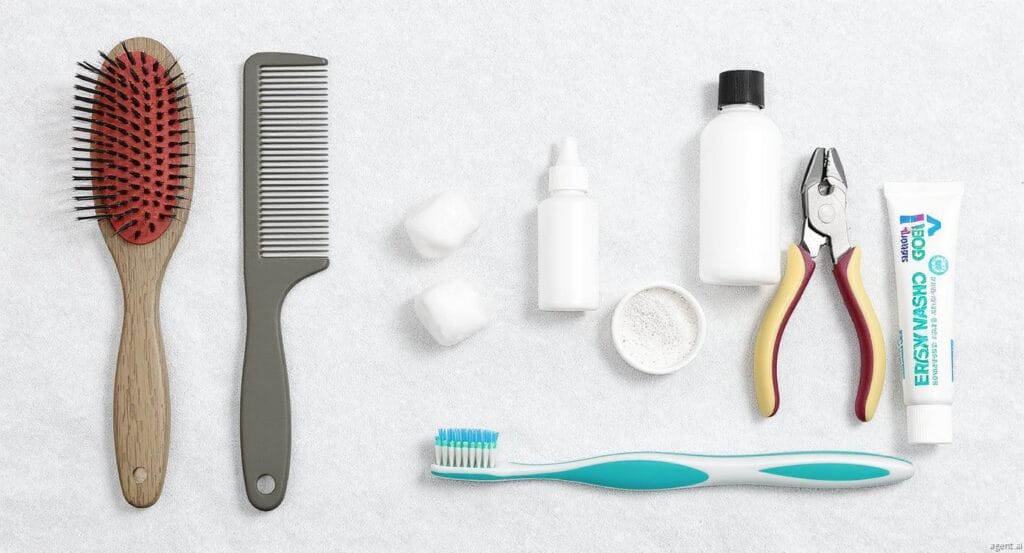
You can’t do a professional job without the right tools. Before you start, gather these essentials:
- Brushes and Combs: The type you need depends on your dog’s coat. Common types include:
- Slicker Brush: Great for removing mats and tangles in medium- to long-haired dogs.
- Undercoat Rake: Essential for double-coated breeds (like Huskies or German Shepherds) to remove the dead undercoat.
- Bristle Brush: This brush is ideal for short-haired breeds (like Beagles or Labradors) to remove loose hair and polish the coat.
- Comb: A wide-tooth and fine-tooth comb for finishing and detangling.
- Dog-Specific Shampoo and Conditioner: Never use human shampoo! A dog’s skin has a different pH level, and human products can cause irritation and dryness. Choose a formula suited for your dog’s skin (e.g., oatmeal for sensitive skin, medicated for specific conditions).
- Nail Clippers:
- Guillotine Style: Best for small- to medium-sized dogs.
- Scissor Style: Good for larger dogs with thicker nails.
- Styptic Powder is crucial for stopping the bleeding if you accidentally cut the quick (the sensitive pink part of the nail).
- Ear Cleaner: Use a veterinarian-recommended ear cleaning solution. Avoid using cotton swabs deep in the ear canal.
- Dog Toothbrush and Toothpaste: Human toothpaste is toxic to dogs. Use a soft-bristled toothbrush and enzymatic toothpaste made for canines.
- Grooming Clippers: If you plan to trim your dog’s fur, invest in good-quality, quiet clippers with various guard combs for different lengths.
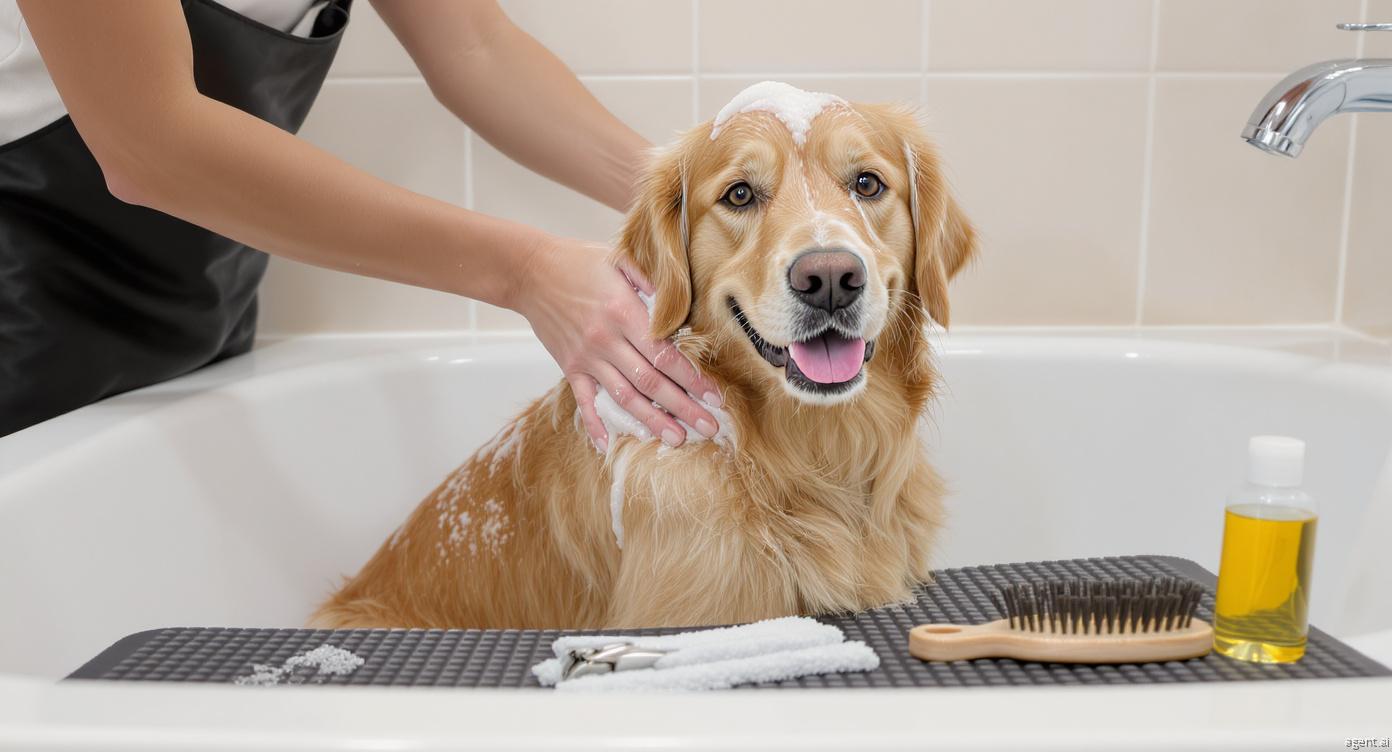
- Other Essentials: Cotton balls, plenty of towels, a non-slip mat for the tub, and a handheld sprayer if possible.
Step-by-Step Guide to Safe Dog Grooming at Home
Grooming should always be done in a careful, quiet setting. Don’t hurry things. To establish a favorable association, provide lots of praise and expensive treats.
Step 1: The Pre-Bath Brush
- Select the right brush or comb for your dog’s coat type.
- Always brush in the direction of hair growth.
- Start with gentle strokes to avoid pulling the skin. Be extra careful around sensitive areas like the belly and behind the ears.
- Use this time to check for any lumps, bumps, ticks, fleas, or skin irritations.
- Pro Tip: Brushing before the bath is vital. It removes loose hair and debris, preventing the drain from clogging and allowing the shampoo to better reach the skin.
Step 2: The Perfect Bath
- Non-slip mat. Choose a safe, contained area like a bathtub or a large sink. Place a non-slip mat at the bottom to make your dog feel secure.
- Water Temperature: Use lukewarm water. It should be comfortable to the touch on your wrist.
- Thoroughly Wet the Coat: Use a handheld sprayer or a jug to wet your dog’s coat completely, down to the skin.
- Apply Shampoo: Dilute the shampoo with water as per instructions. Lather it gently all over your dog’s body, avoiding the eyes and inner ears. Massage the lather into the skin to promote blood circulation.
- Rinse, Rinse, Rinse: Incomplete rinsing is a common cause of skin irritation. Rinse until the water runs completely clear and no suds remain.
- Conditioner (Optional): If using a conditioner, apply it now, mainly focusing on the longer-haired areas. Rinse thoroughly.
- Dry Thoroughly: Use towels to absorb as much water as possible. For dogs with thick coats, you can use a blow dryer on the lowest, coolest setting, keeping it moving constantly and at a safe distance to prevent burns.
Step 3: Nail Trimming—Conquer the Fear
For owners, this is frequently the most intimidating aspect, but it doesn’t have to be.
- Locate the Quick: In dogs with clear nails, you can see a pink area inside the nail—this is the quick, which contains nerves and blood vessels. You must avoid cutting into it. On black nails, it’s invisible, so be extra cautious.
- Make Small Cuts: Instead of one big clip, take off tiny slivers of the nail. Look at the cut end of the nail after each snip. When you see a black dot in the center (the beginning of the quick), stop.
- Angle the Clippers: Cut from top to bottom at a 45-degree angle.
- If You Cut the Quick: Don’t panic. Apply styptic powder immediately with firm pressure. If you don’t have any, use a bar of soap or cornstarch as a temporary measure.
- Alternative: If your dog is too stressed, use a nail grinder/filer to slowly sand the nails down, which avoids the quick altogether.
Step 4: Ear Cleaning
- Inspect First: Look inside the ears. They should be light pink, not red or swollen, and have no foul odor.
- Apply Solution: Soak a cotton ball with the ear cleaning solution. Gently wipe the inside of the ear flap and the accessible parts of the outer ear canal.
- Massage: After applying a few drops of solution into the ear canal (if recommended by your vet), gently massage the base of the ear for 20-30 seconds. You’ll hear a squishing sound.
- Let Them Shake: Stand back and let your dog shake its head—this brings deeper debris to the surface.
- Wipe Clean: Use a fresh cotton ball to wipe away the loosened wax and debris. Never probe deep into the ear canal with a Q-tip.
Step 5: Dental Care
- Introduce toothbrushing slowly. Let your dog taste the toothpaste first.
- Gently lift the lips and brush in a circular motion, focusing on the outside surfaces of the teeth where plaque accumulates most.
- Even 30 seconds a day can make a massive difference in preventing periodontal disease.
Advanced Tips for Different Coat Types
- Short-Haired Dogs (e.g., Labrador, Boxer): Use a rubber curry brush or bristle brush weekly. They shed a lot, so regular brushing is key.
- Long-Haired Dogs (e.g., Shih Tzu, Maltese): Require daily brushing with a slicker brush and comb to prevent severe mats and tangles.
- Double-Coated Dogs (e.g., Husky, Golden Retriever): Never shave them! Use an undercoat rake during shedding season to remove the dead undercoat. Regular brushing is essential to maintain their insulating properties.
- Curly-Haired Dogs (e.g., Poodle, Bichon Frise): Require frequent brushing and professional-style clipping every 4-6 weeks to prevent mats.
When to Seek a Professional Groomer or Vet
While Dog Grooming at Home is rewarding, know your limits. Seek professional help for:
- Severe matting that cannot be brushed out.
- Expressing anal glands (unless your vet has shown you how).
- A very anxious or aggressive dog that poses a safety risk.
- Any sign of infection, such as red, swollen ears or skin lesions.
Conclusion: Patience and Consistency are Key
Dog Grooming at Home is a journey. Begin with brief, constructive sessions and work your way up to the entire process. Your pet’s health and happiness are the main priorities, not perfection. The bond and trust you create are invaluable, and the money you save is a bonus. With the help of this book, you can provide your pet the affectionate care they need in the convenience of your own home.
Also Read: Salmonella in Dog Food: The Risks You Must Know (and How to Protect Your Dog)
Also Read: Cozy Moments with Your Pet: The Joys and Challenges of Living with Dogs & Cats