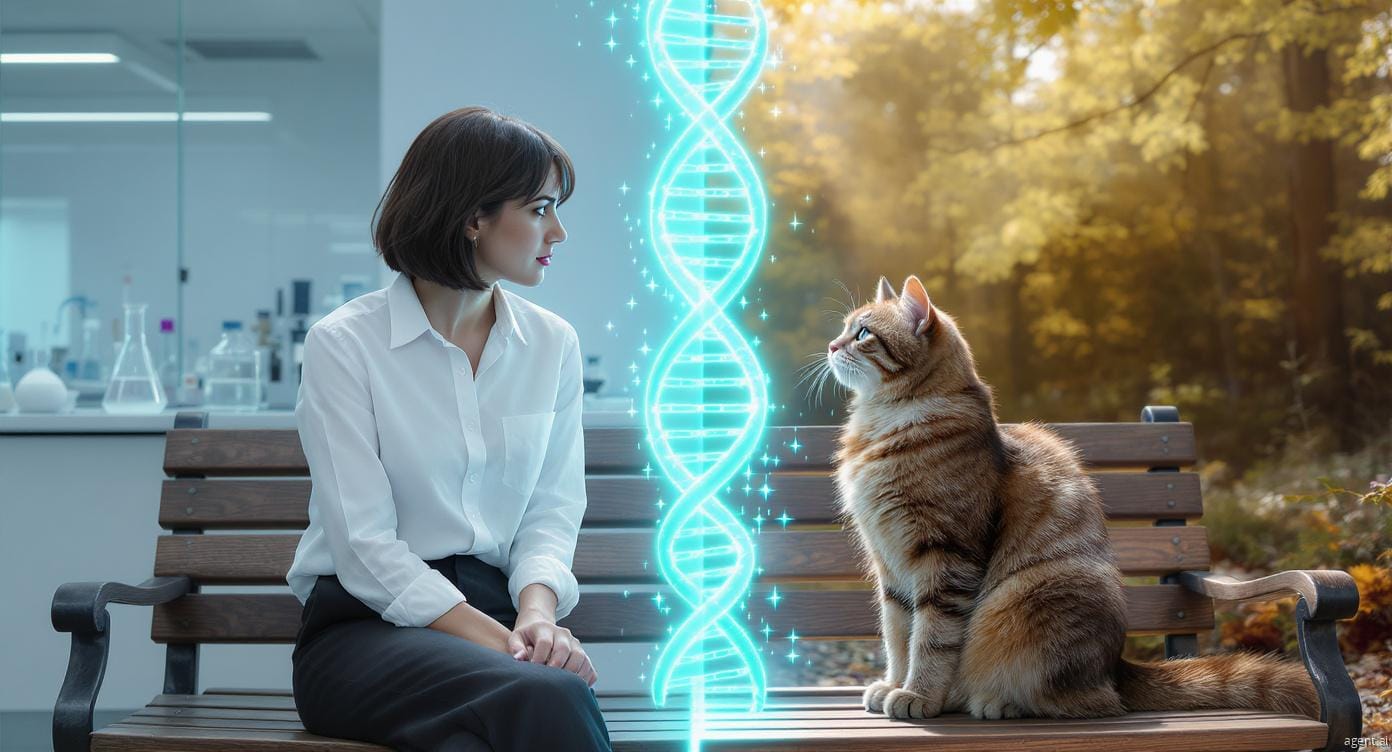
Have you ever felt an odd sense of connection with your cat as if your furry companion somehow “gets” you? Science might have an explanation for that feeling.
Recent research has revealed something fascinating: humans share around 90% of their DNA with cats.
That’s right. Beneath our skin, muscles, and fur (or lack thereof), humans and cats are far more genetically alike than most people realize. But what does “90% shared DNA” really mean? Does it make us feline cousins? Or is it an exaggerated fun fact?
In this article, we’ll explore the science, myths, pros, cons, and real meaning behind this viral claim and uncover what it says about evolution, medicine, and your bond with your pet cat.
1. What Does It Really Mean to Share 90% of DNA with Cats?
When people hear “humans share 90% of DNA with cats,” it sounds like we’re nearly identical. But that’s not exactly true.
The figure refers to gene homology, the percentage of genes that have counterparts (called homologs) in both species. In simpler words, around 90% of the genes found in cats have a similar or comparable version in humans.
That doesn’t mean our genomes (the entire DNA code) are 90% identical. Instead, it means that the types of genes and their functions overlap significantly.
For example:
- Cats have about 20,000 protein-coding genes, and roughly 16,000 of them match human genes in structure or function.
- The overall sequence similarity between cat and human genes varies; some are nearly identical, while others differ drastically.
In short, the 90% figure shows that cats and humans use a surprisingly similar set of biological “instructions” to build their bodies, repair cells, and fight diseases.
2. How Scientists Discovered This Feline Connection
It wasn’t just a random statistic from the internet; it came from detailed genome studies.
When the domestic cat genome was first sequenced in 2007, scientists were astonished at how closely its genes resembled humans’. Later refinements using whole-genome sequencing confirmed the strong overlap.
Researchers found that:
- Cat chromosomes share a similar gene order (synteny) to human chromosomes.
- Many cat genes responsible for metabolism, neurological function, and immunity are nearly identical to ours.
- Cats are actually genetically closer to humans than dogs are in certain areas of their genome.
This similarity has made cats an emerging model species for human genetic research, especially for studying inherited diseases.
3. The Evolutionary Link Between Humans and Cats
To understand why we share so much DNA, we must travel back through time to about 65 million years ago. That’s when the ancestors of modern mammals, including primates (us) and carnivores (cats), diverged from a common ancestor.
From that single branch of early mammals evolved many lineages; some became apes, and others turned into felines. Yet, even after millions of years of evolution, the genetic “blueprint” stayed remarkably consistent.
So, while humans and cats took very different evolutionary paths, one toward intelligence and upright walking, the other toward agility and night vision, the core biological code remained much the same.
That’s why we both share similar genes for:
- DNA repair
- Cell signaling
- Organ development
- Hormonal balance
- Neural communication
Evolution didn’t reinvent the wheel—it simply modified the same genetic tools for different purposes.
4. The Amazing Side: Why This Is Good News
Let’s start with the positive side of this genetic overlap.
a) Cats Help Advance Human Medicine
Because cats share so many genes with humans, they are increasingly used as models for studying human diseases.
Conditions like blindness, muscular dystrophy, and certain cancers occur naturally in cats, often due to the same genetic mutations seen in humans. Studying these can lead to better treatments and diagnostic tools for both species.
In fact, a study from the University of Missouri found that “dark matter” in cat genomes, the non-coding regions, may hold clues to human genetic disorders.
b) Shared Biology, Shared Emotions
Cats and humans also share similarities in neurotransmitters, the brain chemicals that control mood, stress, and pleasure. That’s why your cat’s purr or your cuddling session can have measurable calming effects on both of you.
This isn’t just emotional fluff; it’s biology in action.
c) A Deeper Connection to Nature
Realizing how genetically close we are to other species, including cats, reminds us that we’re not separate from nature; we’re part of it.
This awareness promotes empathy, compassion, and responsibility toward animals and the environment.
5. The Alarming Side: The Myths and Misinterpretations
Of course, this “90% cat” idea can be misleading when taken too literally.
a) We’re Not 90% Identical
Humans and cats share similar genes, but how those genes are expressed is vastly different.
Even small differences in gene regulation can lead to huge biological differences; that’s why you’re reading this article instead of chasing laser dots.
b) Misused in Pop Science
Many articles and memes online claim “You’re 90% cat!” for shock value, ignoring context. But the science isn’t saying we’re half-cat; it’s saying we have shared evolutionary building blocks.
c) Limits in Research Models
While cats are great for certain genetic studies, they’re not perfect human substitutes. Their environment, metabolism, and immune responses differ. So results from feline studies don’t always translate directly to humans.
Also Read: White Iberian Lynx: Rare Discovery and Conservation Success
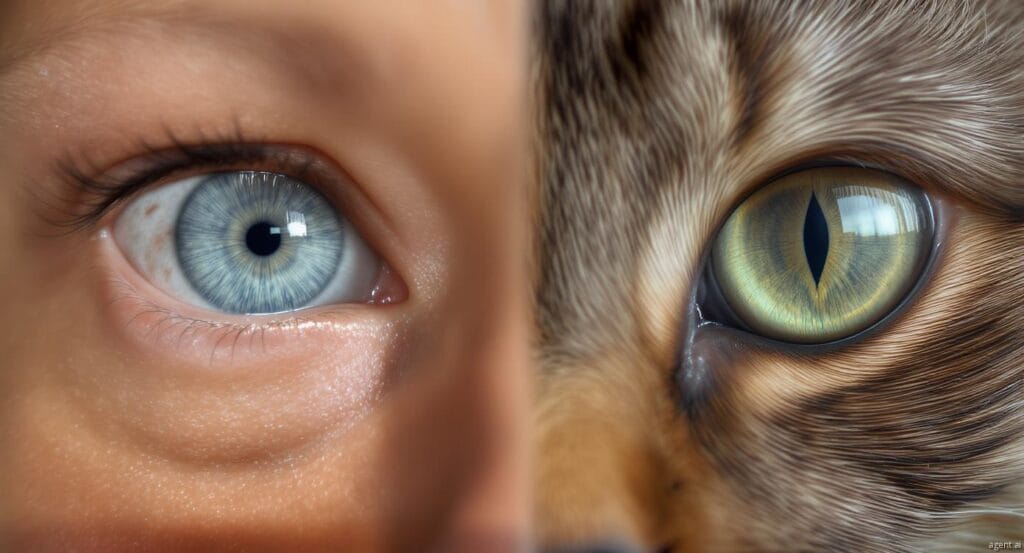
6. What 90% Shared DNA Reveals About Our Health
Interestingly, that shared DNA goes beyond fun trivia; it can affect your life in real ways.
a) Better Understanding of Human Diseases
Because cats develop many of the same inherited disorders, scientists can test gene therapies and treatments more effectively.
This has already led to insights into neurological diseases, eye conditions, and obesity in humans.
b) Veterinary Benefits
The reverse is true, too; by understanding human genetics, veterinarians can better diagnose and treat cats. Shared DNA = shared medical progress.
c) Future of Genetic Medicine
Gene-editing tools like CRISPR are now being tested in feline DNA to study inherited blindness and cancer. The results may one day save both cats and humans from similar diseases.
7. Cat Behaviors That Might Be in Your DNA Too
While you (hopefully) don’t chase mice or nap in cardboard boxes, there are subtle cat-like traits humans share, thanks to overlapping genes affecting circadian rhythms and sensory perception.
- Both species are crepuscular: most active at dawn and dusk.
- Both crave warmth and comfort: linked to similar hypothalamic responses.
- Both enjoy play and curiosity: driven by shared dopamine reward circuits.
Maybe that’s why cat people “get” cats so easily, your brain chemistry isn’t that different.
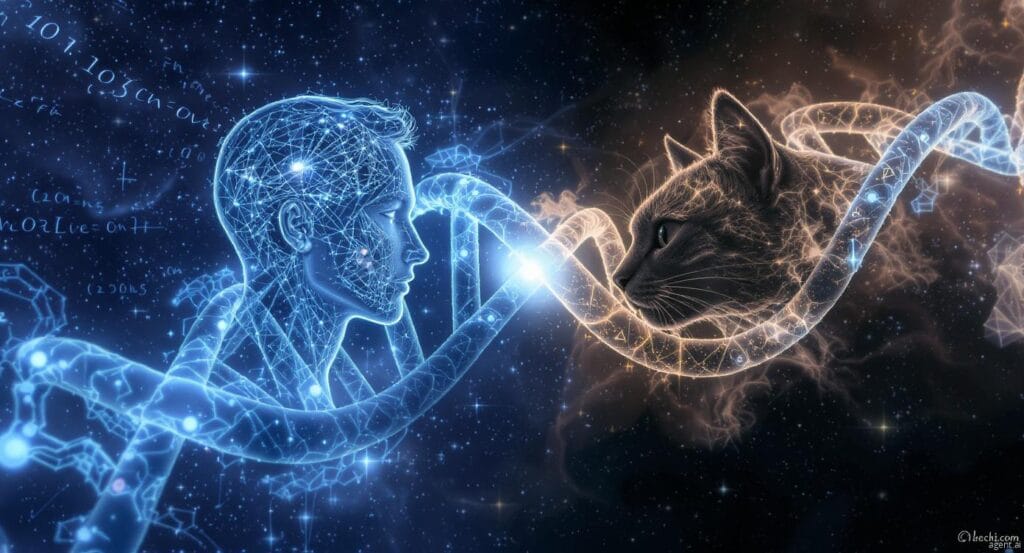
8. How Far Apart Are We Really?
Let’s put the 90% figure in perspective:
| Species | % DNA Shared with Humans |
|---|---|
| Chimpanzees | 96% |
| Cats | 90% |
| Dogs | 84% |
| Mice | 85% |
| Cows | 80% |
So yes, your cat is closer to you genetically than a cow or even your pet dog in some regions of DNA. But there’s still a 10% difference, which is massive when you consider the human genome has 3 billion base pairs.
That 10% accounts for our intelligence, speech, bipedalism, and everything that makes humans unique.
9. The Bigger Message: Respecting Our Shared Biology
The fact that humans and cats are so closely related at the genetic level is both beautiful and humbling.
It tells us that evolution works through connection, not isolation.
It reminds us that cruelty to animals, or to the environment, is ultimately harm to ourselves, because at the molecular level, we’re built from the same material.
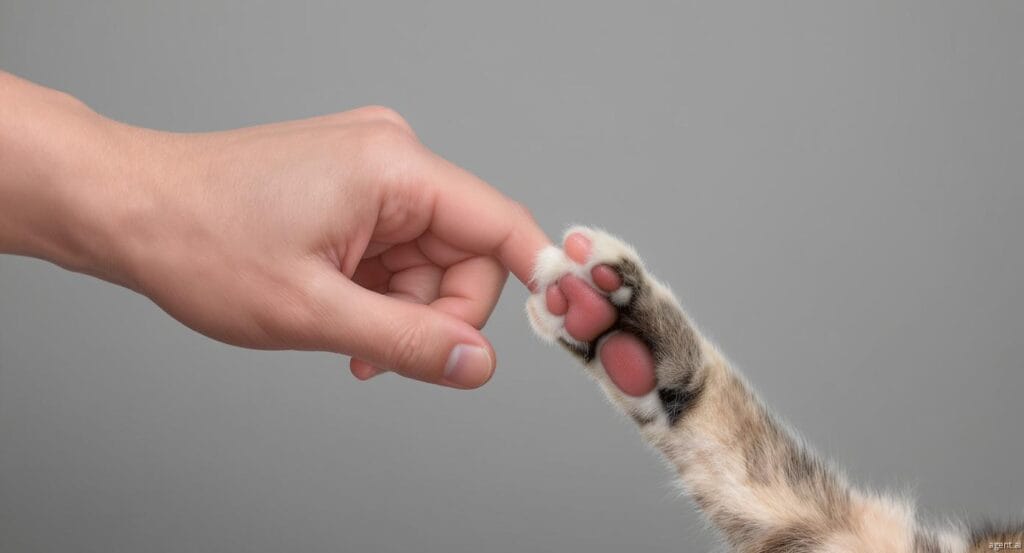
So, the next time your cat curls up next to you, know that she’s not just a pet. She’s your distant genetic cousin, a living, breathing reminder of your place in nature’s family tree.
10. Quick Summary: The Purr-fect Truth
| Aspect | Fact |
|---|---|
| DNA repair, metabolism, and emotion regulation | 90% gene similarity between humans and cats |
| Common ancestor | 65 million years ago |
| Shared traits | DNA repair, metabolism, emotion regulation |
| Medical link | Cats help model human diseases |
| Misconception | “90% identical” ≠ same species |
Conclusion: You’re More Cat Than You Think (But Not Literally)
Humans share about 90% of their DNA with cats, a reminder that the boundary between species is far thinner than we imagine.
It’s an amazing truth because it shows our interconnectedness and helps advance medicine.
It’s also an alarming truth because it challenges our sense of uniqueness.
In the end, being “90% cat” doesn’t mean you’re about to grow whiskers; it simply means that you and your feline friend are both products of the same ancient evolutionary masterpiece.
So, next time your cat stares at you from across the room… Maybe she’s recognizing a little bit of herself in you.
FAQ
1. Do humans and cats really share around 90% DNA?
Yes, humans and cats share many similar genes that perform basic biological functions.
2. What does this level of DNA similarity mean?
It means both have many of the same genes, but they are expressed differently.
3. Which species is genetically closest to humans?
Chimpanzees are closest, while cats also show a high level of similarity.
4. Why do humans and cats look so different despite shared genes?
Small genetic differences and gene expression cause major physical and behavioral changes.
5. How do scientists measure genetic similarity?
By comparing genome sequences and identifying matching genes.
6. Does this similarity help in medical research?
Yes, it helps researchers study diseases and treatments.
7. Does shared DNA affect how cats bond with humans?
Not directly, but it may support emotional awareness.
8. Are any behaviors influenced by shared genes?
Yes, traits like sleep cycles and curiosity are linked to shared genes.
9. Are cats genetically closer to humans than dogs?
Yes, cats share more genetic similarity than dogs.
10. Why is this genetic similarity important?
It helps explain evolution and the human–cat connection.
Also Read: Shocking Dog Owner Mistakes That Secretly Cut Years Off Your Dog’s Lifespan