Introduction
Adopting a dog may be an exciting, hopeful, and somewhat uncertain experience. Some dogs find it difficult to adjust, particularly when it comes to connecting with a partner. This hesitancy is not a sign of lack of affection, rejection, or stubbornness. More often than not, it is fear molded by unfamiliar patterns, past experiences, and uncertainty about trust.
A dog is conveying a crucial message when it clings to one person while avoiding the other. Fear can develop into anxiety, defensive behavior, or long-term distance if these early warning signs are ignored. Fortunately, bonding does not entail coercing love. It has to do with tolerance, comprehension, and building secure emotional connections.
This article will teach you how a dog builds trust, why a spouse may accidentally appear scary, and how to help both parties interact naturally. When bonding is done properly, it becomes a process of calm reassurance rather than pressure, making your dog feel safe, understood, and at home.
During the early stages of adjustment, many adopted pets may exhibit fear, particularly when they are unfamiliar with new people and routines. The American Society for the Prevention of Cruelty to Animals claims that behavior rehabilitation can assist pets in overcoming trauma and regaining their trust. American Society for the Prevention of Cruelty to Animals Behavior Rehabilitation Overview
Also Read- 7 Smart Winter Ways to Help Dogs’ Joints | Avoid Stiffness & Pain
Understanding Why an Adopted Dog May Fear Your Spouse
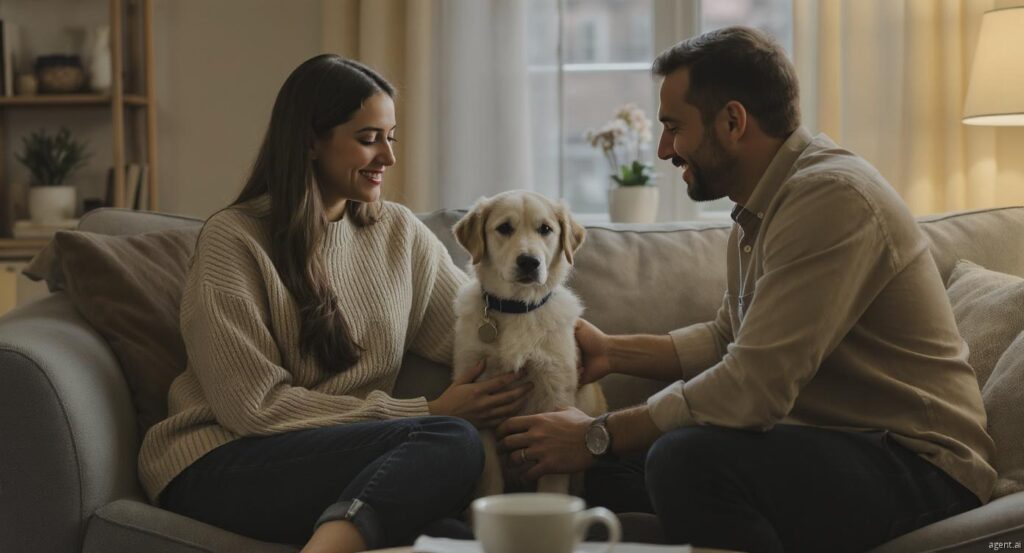
It’s critical to identify the source of your dog’s fear before attempting to strengthen their attachment. Adoption frequently comes after instability. Many dogs come from shelters, rescues, or former homes where they had traumatic or unpredictable experiences.
It’s possible for a spouse to inadvertently look like someone from the Dog’s past. Emotional memory can be triggered by variations in facial hair, posture, walking style, voice tone, and even scent. A sensitive dog that is still learning safety may perceive a deeper voice or direct eye contact as menacing.
Dogs have early attachment styles as well. During the initial days, if one partner spends more time at home, the dog may form a stronger attachment with that person and perceive the spouse as a stranger. This isn’t partiality. It’s a survival instinct.
In order to help a dog bond, pressure must be removed and replaced with predictability and careful trust-building.
Tip 1: Let the Dog Control the Pace of Interaction
Pushing interaction too quickly is one of the most common blunders made by couples. When a dog feels pressured into intimacy, they tend to retreat even more.
Your partner should let the dog make the first move. A sense of control is created by sitting quietly in the same space, avoiding direct looking, and allowing the dog to approach when it’s ready. For an unstable dog, control is safety.
Tension can be decreased by doing as little as turning sideways rather than immediately facing the dog. Helping the dog understand that your spouse does not require affection or attention is the aim.
Trust develops organically when a dog chooses to interact rather than being forced to.
Experts emphasize that building trust after adoption begins by allowing emotional space and avoiding forced interaction, which is essential for creating positive, stress-free connections in newly adopted pets. Why positive space improves bonding with adopted pets
Tip 2: Build Trust Through Calm Daily Presence
More important than excitement is consistency. Excitement is not the only way a dog bonds. Calm exposure on a regular basis fosters bonding.
The dog’s routine should include your partner. The dog learns that nothing negative occurs around this person when you sit quietly while it naps, are present during moments of relaxation, and share the same area without expectations.
Steer clear of abrupt movements and loud greetings. A dog can read energy more quickly than words. Emotional safety is produced by gentle posture, unhurried movements, and calm breathing.
Over time, the dog will become more at ease and see your spouse as a predictable aspect of life rather than an unpredictable menace thanks to this consistent presence.
Also Read: Calm Pets Terrified by New Year Eve Fireworks | 7 Proven Tips
Tip 3: Use Feeding Time to Create Positive Associations
One of the best ways to foster trust is through food. When applied properly, it can assist in changing a dog’s emotional state.
Allow your spouse to assist with feeding, but avoid crowding or hovering. The dog can learn to associate food with your spouse’s presence without feeling pressured if you gently place the bowl down and take a step back.
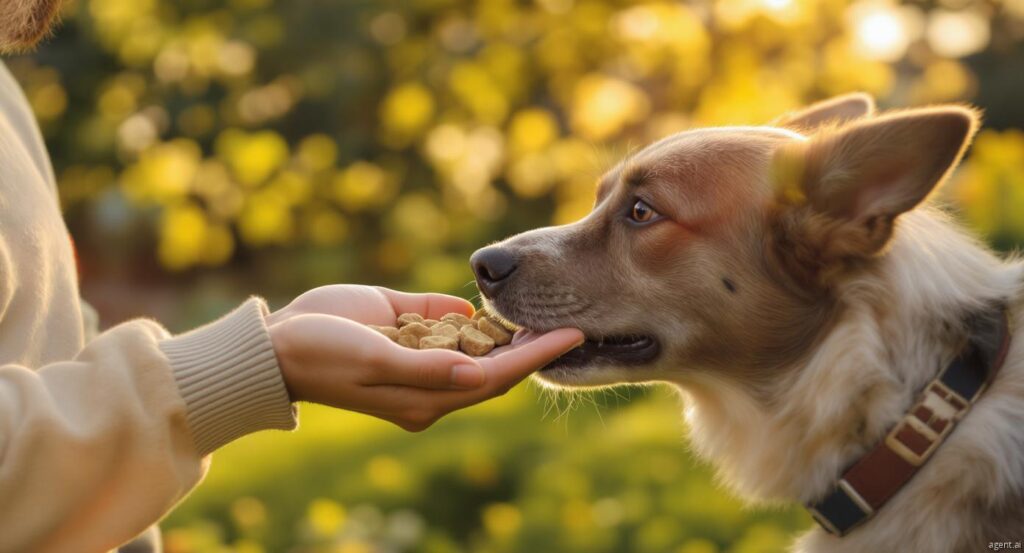
Once the dog is comfortable, hand-feeding small treats may be beneficial. Patience is the key. Your partner should be motionless and composed and allow the dog to make the final decision if it hesitates.
Using positive reinforcement techniques, such as reward-based training, helps create calm associations and enhances emotional trust between you and your pet. Positive reinforcement methods to strengthen pet relationships
This method gradually replaces dread with anticipation by teaching the dog that positive things are always coming from your spouse.
Tip 4: Create Shared Low-Stress Activities
Shared experiences, not forced love, build bonding. Activities should be stress-free, predictable, and peaceful. An anxious dog may become overwhelmed by intense play too soon, particularly if trust has not yet been established.
The best routines are simple ones. The dog can observe your partner in a neutral environment by taking short walks, spending peaceful time in the yard, or sitting together during downtime. Walking side by side is very effective since it fosters a sense of teamwork and eliminates direct conflict.
Your spouse should speak softly and move slowly. Instead of taking the lead in the interaction, let the dog explore while staying close. Over time, the dog learns to associate your partner with comfort rather than uncertainty thanks to these shared times.
Also Read: Thanksgiving Pet Safety: 7 Powerful Do’s & Don’ts You’ll Wish You Knew Earlier
Tip 5: Respect the Dog’s Emotional Boundaries
Every dog has unseen emotional boundaries that should never be suddenly breached. Bonding is not slowed down by respecting limits. It quickens it.
It’s important to pay attention to any cues the dog gives, such as pulling away, stiffening, or avoiding eye contact. Without resentment or disappointment, your spouse should take a step back right away. Dogs are quick observers of emotional responses, and pressure frequently validates their anxiety.
In the beginning, avoid hugging the dog, bending over them, or touching delicate parts like their head or paws. Before physical intimacy, let trust grow.
Your companions start to feel comfortable expressing curiosity rather than fear when they discover that their signals are understood.
Tip 6: Let Your Spouse Become a Source of Comfort
Many animals form the closest bonds with people who reassure them emotionally. Touch is not always necessary for comfort. Sometimes the most important thing is quiet protection.
Being close by without being crowded can help if your partner exhibits anxiety brought on by unexpected noises, guests, or strange circumstances. Emotional reactions can be controlled by maintaining composure and speaking in a steady, quiet voice.
Refrain from correcting scared reactions with directives or discipline. It is impossible to train fear away. It must be calmed.
Over time, your companion starts to identify your partner with emotional stability, which fosters trust that goes well beyond basic compliance.
Tip 7: Avoid Competition and Build a Unified Front
One of the most neglected parts of bonding is how partners interact with a recently adopted companion. Confusion and emotional instability are sometimes the results of attachment turning into rivalry.
The same procedures, standards, and boundaries should be adhered to by both parties. The animal may choose the simpler course of action while being wary of the other if one person permits activity that the other forbids.
Your pet should perceive you and your partner as a cohesive team rather than two distinct emotional worlds. Security and clarity are produced by calm cooperation.
Instead of becoming selective, connection grows organically when trust is based on consistency and emotional resonance.
Common Mistakes That Can Increase Fear
Certain actions might accidentally impede growth, even when done with the best of intentions.
Withdrawal is frequently caused by rushing physical contact. It can be intimidating to look a dog in the eyes. Fear rather than familiarity may be reinforced by loud laughing, abrupt movements, or intimidating body language.
Another error is thinking that all would be resolved by time alone. Time is beneficial, but only when combined with deliberate exposure to quiet and emotional awareness.
It takes active patience, not passive waiting, to help a dog bond.
Also Read: National Dog Show 2025: The Complete Origin Story, History, and Why America Loves It
How Long Does Bonding Usually Take
A universal timeline does not exist. While some adopted companions need months to completely trust a spouse, others start to unwind in a matter of weeks. There is no linear progression. Emotionally, a sensitive pet may advance and then briefly retreat.
The most important thing is consistency. Every peaceful encounter leaves an enduring emotional mark. Learning is still taking place underneath the surface, even when progress seems sluggish.
Quietly, trust grows. Families frequently don’t see the connection until it has already developed.
When to Seek Professional Help
If fear escalates into growling, snapping, or extreme avoidance, professional guidance may be necessary. A certified behaviorist or trainer experienced with adopted animals can identify emotional triggers and design a structured plan.
Seeking help is not a failure. It is a clear sign of responsibility and genuine care.
Early support can stop fear from turning into long-term anxiety.
Recognizing early signs of anxiety in pets, such as pacing or hiding, can help you decide when to consult a veterinarian or professional behaviorist for deeper support. Fears, phobias, and anxiety in pets: indicators and advice
Also Read: Top 3 Dog Breeds at Risk | Why the French Bulldog Faces a Critical Future
Conclusion
It is not necessary to alter your adopted companion’s personality to strengthen their link with your spouse. It involves creating an atmosphere that makes trust seem feasible. When an animal feels safe, respected, and heard, its fear diminishes.
Your partner can become a source of consolation rather than uncertainty with the help of common habits, patience, and a calm presence. Quietly, a connection is formed through repeated little moments throughout time.
When fear is dealt with early on, trust can develop. Additionally, your pet does not just adapt to the house when trust is established. At last, they feel like they fit in.
Emotional adjustment after adoption takes time, patience, and predictable routines to foster confidence and security in a new home, helping pets gradually build lifelong trust. How consistent routines help adopted pets adjust with confidence
FAQ’s
1. How long does bonding usually take after adoption?
Bonding time varies. Some pets adjust quickly, while others need months of calm consistency.
2. Is fear toward a spouse normal at first?
Yes, hesitation is common and often linked to past experiences or unfamiliar energy.
3. Should bonding be forced early on?
No, forced interaction can increase stress and slow emotional connection.
4. Can feeding help build trust?
Yes, gentle feeding routines help create positive emotional associations.
5. Why does my pet bond with one person faster?
Early presence and calm behavior often influence initial attachment.
6. Are walks helpful for connection?
Quiet walks side by side can reduce tension and build comfort naturally.
7. What behaviors should be avoided?
Sudden movements, direct staring, and loud reactions should be avoided early.
8. Is slow progress a bad sign?
No, emotional trust often develops quietly beneath the surface.
9. When should professional help be considered?
If fear turns into aggression or extreme avoidance, expert guidance is wise.
10. Can early patience prevent long-term issues?
Yes, calm support early can stop fear from becoming permanent anxiety.
Also Read: EHV-1 Outbreak Explained: Hidden Causes, Symptoms, Prevention & Global Impact on Horses


















Post Comment