Introduction
Pet owners beware: a major dog and cat food recalled alert has recently been issued across several states. Multiple popular pet food brands have been pulled from shelves due to potential health risks that could endanger your furry companions.
If you’ve recently purchased dog or cat food, it’s crucial to check whether your brand is affected. This guide will explain why the dog and cat food was recalled, what symptoms to watch for, and how to keep your pets safe. Why Was Dog and Cat Food Recalled?
Why Was Dog and Cat Food Recalled?
The dog and cat food recalled Following routine testing that found signs of bacterial contamination, namely Salmonella and Listeria monocytogenes, the notification of the dog and cat food recall was made. By handling tainted food, these bacteria can be transmitted to people and cause serious sickness in dogs.
In accordance with the FDA’s safety regulations for pet food manufacturing, manufacturers voluntarily initiated the recall to prevent additional hazards.
Common reasons for pet food recalls:
- Contamination from bacteria or mold
- Incorrect ingredient labeling
- Toxic ingredient levels (e.g., Vitamin D overdose)
- Unapproved chemical preservatives
Health Risks Linked to Recalled Pet Food
Feeding recalled food can have serious health consequences for both dogs and cats.
Here are the most common health symptoms seen after consuming recalled food:
In Dogs
- Vomiting and diarrhea—Dogs that consume recalled pet food may experience sudden vomiting and diarrhea, which are among the earliest warning signs of contamination. These symptoms occur as the body’s natural response to harmful bacteria or toxins present in the food. Pet owners should closely monitor their dogs for signs of dehydration, loss of appetite, or lethargy. If vomiting or diarrhea persists for more than a day, it’s essential to contact a veterinarian immediately to prevent more serious complications.
- Loss of appetite—A noticeable loss of appetite is another concerning sign among the health risks linked to recalled pet food. Dogs exposed to contaminated food may stop eating because of stomach discomfort, nausea, or an overall feeling of illness. Even missing a few meals can signal a deeper issue that needs attention. If your dog seems uninterested in food, becomes unusually quiet, or shows low energy, it’s best to contact your veterinarian. Early care can prevent dehydration, weight loss, and other serious complications caused by poor nutrition.
- Fever and lethargy—Fever and lethargy are common warning signs among the health risks linked to recalled pet food. Contaminated food can trigger the body’s immune response, leading to an elevated temperature and a noticeable drop in energy levels. Dogs may appear unusually tired, sleep more than usual, or show little interest in play and daily activities. These symptoms often suggest an infection or inflammation caused by harmful bacteria or toxins in the recalled product. If your dog’s temperature remains high or their weakness persists, immediate veterinary evaluation is strongly advised to ensure proper treatment and recovery.
- Abdominal pain or dehydration—Abdominal pain and dehydration are serious health risks linked to recalled pet food that can quickly affect your dog’s well-being. Contaminated food may irritate the stomach and intestines, leading to cramping, bloating, or visible discomfort when touched. Dogs experiencing abdominal pain often whine, refuse to eat, or lie in unusual positions to ease the pain. Continuous vomiting or diarrhea can also cause dehydration, making the condition more dangerous. Providing clean water and seeking prompt veterinary care are essential steps to prevent further complications and support your dog’s recovery.
In Cats
- Drooling or loss of appetite—Excessive drooling and loss of appetite are notable health risks linked to recalled pet food in cats. Contaminated food can irritate the mouth, throat, or digestive system, causing nausea and discomfort that may lead to increased salivation. At the same time, affected cats often refuse to eat, which can quickly result in weakness or dehydration if not addressed. Cat owners should monitor for changes in eating habits or unusual drooling and consult a veterinarian promptly to prevent serious complications and support recovery.
- Jaundice, or yellowing of the gums, is a serious health risk linked to recalled pet food in cats. This condition often indicates liver dysfunction or the accumulation of toxins in the bloodstream due to contaminated ingredients. You may notice a yellow tint on the gums, eyes, or inner ears. Such signs require immediate veterinary attention, as early diagnosis and treatment are crucial to prevent permanent liver damage and ensure the cat’s recovery.
- Fever and digestive distress—Fever and digestive distress are significant health risks linked to recalled pet food in cats. Contaminated food can trigger an immune response, leading to an elevated body temperature, while also causing gastrointestinal issues such as vomiting, diarrhea, or stomach discomfort. These symptoms can quickly result in dehydration and weakness if left untreated. Cat owners should carefully monitor their pets and seek prompt veterinary care if fever or digestive problems persist to prevent more serious health complications.
“Stop feeding the product immediately and contact your veterinarian if you observe these symptoms. Having the food’s packaging on hand will assist your vet in confirming whether it is a Dog and Cat Food Recalled product.”
Also Read– Glycobalance Cat Food Review: Life-Changing Support for Cats—Yet Costly for Owners!
What Pet Owners Should Do Next
If your pet’s food is part of a recall, act promptly:
- Stop Use Immediately: Discard the recalled food safely.
- Sanitize Everything: Clean all bowls, surfaces, and hands that contacted the food.
- Watch for Symptoms: Monitor your pet closely for any illness.
- Report the Issue: Notify both your veterinarian and the FDA Pet Food Complaint Portal.
- Choose a Certified Brand: Switch to a trustworthy food with verified safety standards.
Through proactive awareness, you can effectively safeguard your pet from the threats of food contamination.
How to Check if Your Pet Food Is Affected
You can confirm the Dog and Cat Food Recalled status of your pet’s food through several trusted channels:
- Checking the official FDA Pet Food Recall List.
- Visiting the manufacturer’s website for recall announcements.
- Following trusted pet health news sources for updates.
It is also crucial to retain your purchase receipts and the product packaging. This information is vital to identify the specific recalled dog or cat food and to determine your eligibility for a refund or product replacement.
Also Read– Dog Grooming at Home: The Ultimate Guide to a Healthy and Happy Pet
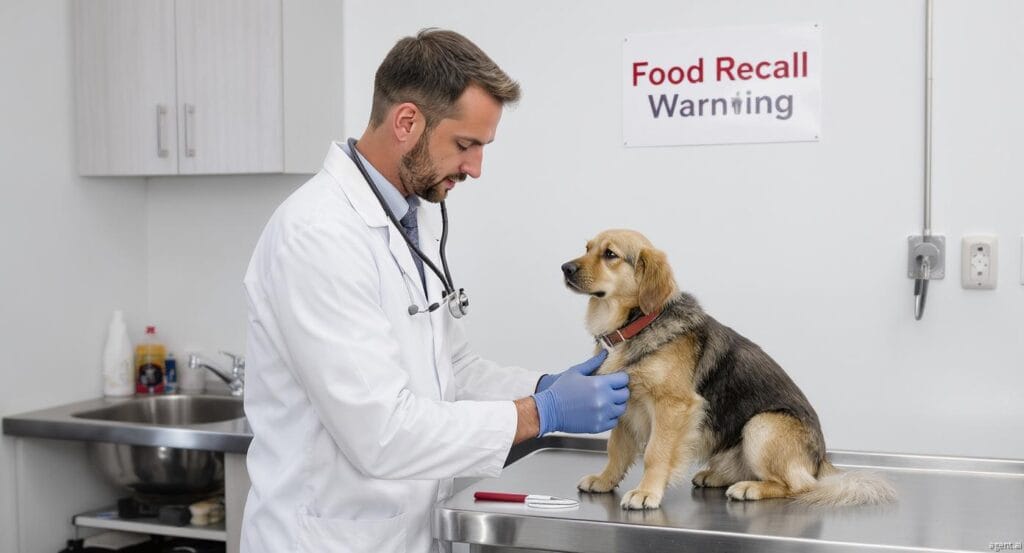
A veterinarian examining a dog after a food recall warning. (Image Generated By Agent.ai)
Safe Alternatives and Prevention Tips
To reduce future risks:
- Choose high-quality, certified brands
- Store food in airtight containers
- Avoid buying in bulk unless consumption is quick
- Stay subscribed to recall alerts
Keep in mind that your attentiveness determines how safe your pet is. Dog and cat food recalled the reports can stop serious health problems before they start.
Conclusion
The recent dog and cat food recalled warning is a wake-up call for every pet owner. Always stay informed, buy from reputable sources, and monitor your pets’ health closely. A few minutes of caution today can save your pet from serious illness tomorrow.
🐾 Stay alert. Stay safe. Protect your pets.