Introduction
The Giant Panda is one of the most iconic animals on the planet, instantly loved for its soft, round body, black-and-white pattern, and gentle nature. However, beyond this cute and cuddly appearance lies a shocking reality: the giant panda is still struggling to survive despite years of conservation efforts. In this article, we will take a deep dive into the world of the giant panda, covering its habitat, diet, lifestyle, behavior, threats, conservation history, and the most surprising giant panda facts that people rarely talk about.
This comprehensive 3000-word guide will give you everything you must know about the giant panda, backed by science, wildlife research, and ecological insights.
What Exactly Is a Giant Panda? (A Complete Overview)
Ailuropoda melanoleuca, the scientific name for the giant panda, is a species of bear that is only found in China. Its distinctive round face and black-and-white fur have made it a global emblem of wildlife. The giant panda, a member of the Ursidae family, is a real bear despite its appearance as a cuddly teddy bear.
The Giant Panda evolved into a herbivore that depends on bamboo, unlike other bears, which are either carnivorous or omnivorous. It is one of the world’s most fascinating and vulnerable species due to its unusual adaptation and restricted environment.
Also Read: Vaccines: 7 Shocking Truths About Pet Owners Who Refuse Them
Giant Panda Physical Features (Appearance That Makes It Iconic)
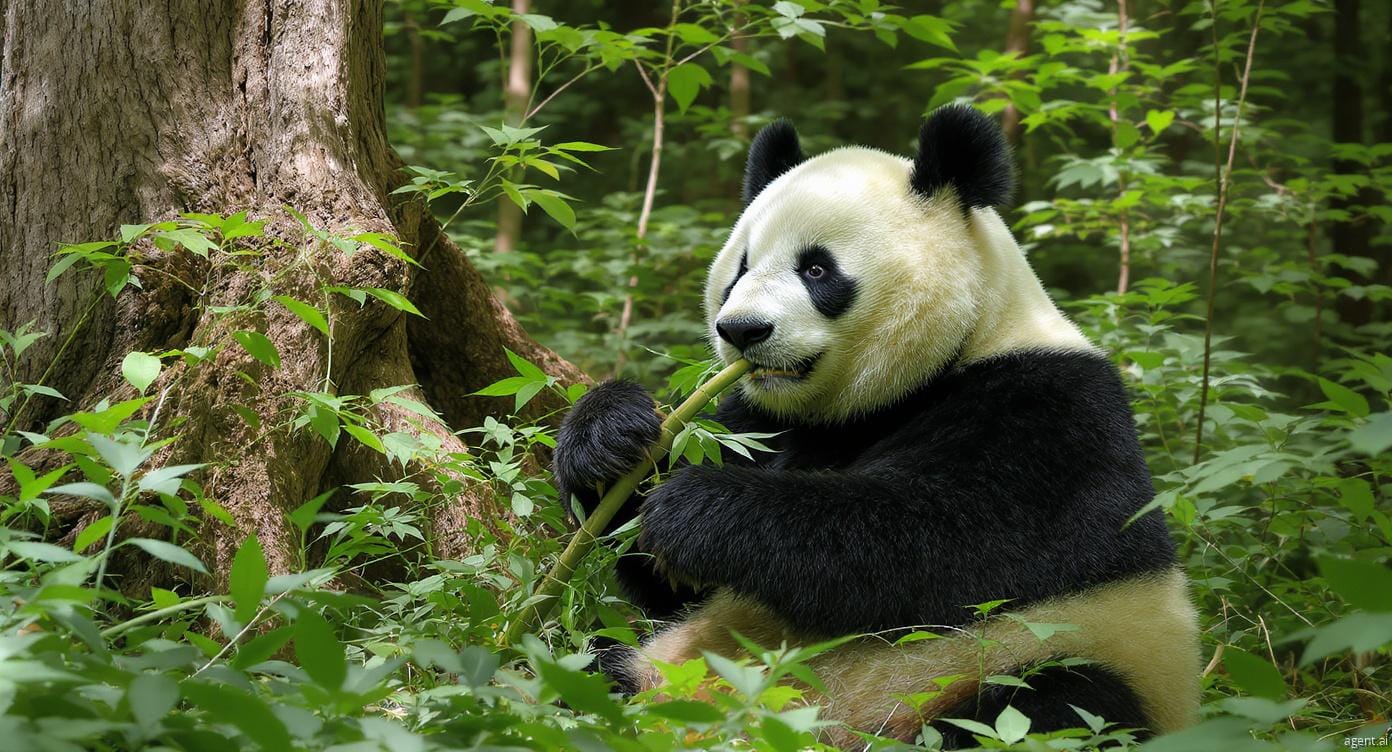
The Giant Panda has a distinctive appearance that makes it instantly recognizable anywhere:
Key Physical Characteristics
- Slightly oval-shaped face with rounded ears
- Black patches around the eyes and limbs
- Soft, thick fur adapted for cold mountain climates
- A pseudo-thumb (modified wrist bone) for grabbing bamboo
- Weight: 80–125 kg in the wild
- Height: 2–3 feet at the shoulder and 4–6 feet when standing
Its thick fur is specially designed for the cold, misty bamboo forests of China. The black patches around its eyes may help reduce glare or improve facial recognition among pandas.
Giant Panda Habitat—Where Do These Bears Live?
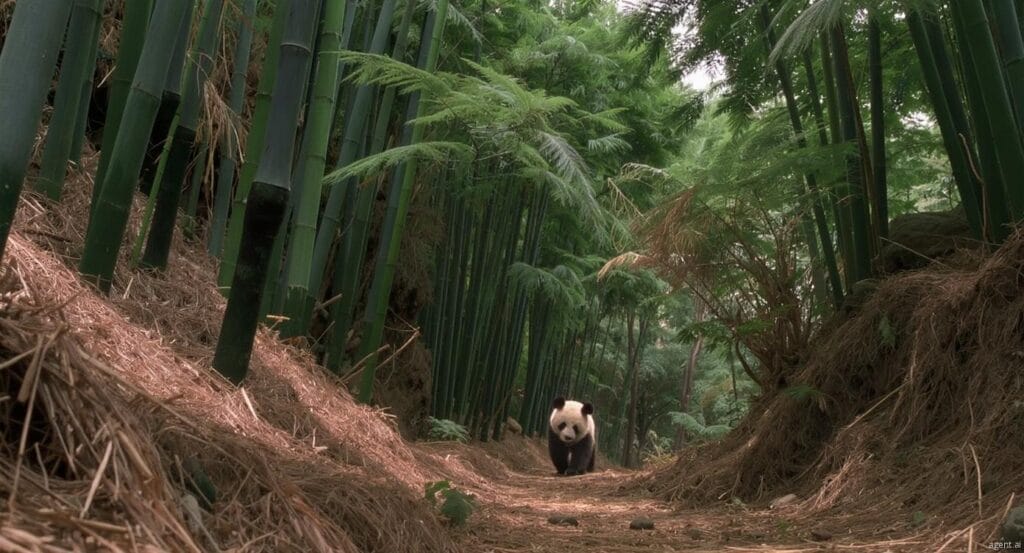
One of the most crucial elements in panda survival is its habitat. Today, giant pandas live only in a few mountainous regions of China, especially in:
- Sichuan Province
- Gansu Province
- Shaanxi Province
These regions are known for their dense bamboo forests, which are essential for panda feeding and shelter.
Why Bamboo Forests Are Critical
The entire giant panda habitat depends on bamboo availability. Bamboo grows rapidly but also dies in cycles. When entire bamboo forests die naturally, pandas have no food source left. That’s why habitat mobility is essential.
Ideal Conditions for Pandas
- Cool, moist climate
- Mountain elevations between 4,500 and 11,500 feet
- Thick vegetation, caves, and shelter areas
- Minimal human activity
Unfortunately, rapid human development, farming, and climate change have dramatically reduced panda habitat areas over the last 100 years.
To see a detailed breakdown of habitat patterns, check National Geographic’s species profile.
Also Read: 10 Mind-Blowing Facts About Whale Communication: Why It May Be Smarter Than Dogs & Cats
Giant Panda Diet—What Do Pandas Really Eat?
Despite being biologically carnivores, 99% of the giant panda’s diet is bamboo. This is one of the most surprising giant panda facts, considering their digestive system is built like a meat-eating animal.
Daily Eating Behavior
- A Giant Panda eats 26–84 pounds of bamboo every single day.
- It spends 10–16 hours daily eating.
- The rest of the time is spent resting or moving to find more bamboo.
Occasional Foods
Although bamboo dominates their diet, sometimes pandas also eat:
- Small rodents
- Eggs
- Grasses
- Tuberous roots
- Dead animals (very rare)
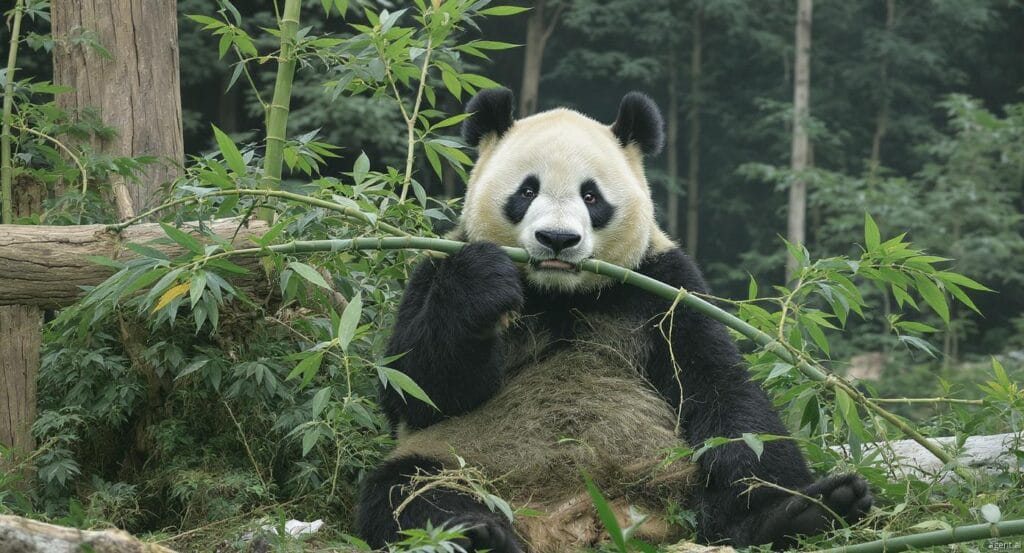
Their bamboo dependency is both fascinating and dangerous because if bamboo forests disappear, pandas cannot shift to a different diet, increasing the extinction threat.
Giant Panda Behavior—How Do Pandas Live?
Understanding giant panda behavior gives important insights into why they are difficult to breed and protect.
Pandas Are Solitary Animals
They prefer living alone rather than in groups. They establish small territories and avoid unnecessary interaction except during mating season.
Sleeping Habits
Pandas sleep 2–4 hours at a time, several times a day. Their sleep pattern resembles a cycle of:
Eat → Sleep → Move → Eat again.
Climbing & Swimming Skills
Even though they look slow, pandas are excellent tree climbers and capable swimmers. Young pandas often play by tumbling, rolling, and climbing trees.
Communication
Pandas communicate using:
- Scent marking
- Body movement
- Bleats, honks, chirps
- Unique calls during mating season
These behaviors help scientists monitor their health and territory.
Why Giant Pandas Are Endangered—The Real Reasons
Although their conservation status was upgraded from “Endangered” to “Vulnerable” in 2016, the Giant Panda is still at high risk. Here are the major reasons why giant pandas are endangered:
1. Habitat Loss
Forest clearing, highways, and farming have destroyed huge areas of bamboo forests.
2. Low Reproduction Rate
Female pandas are only fertile 2–3 days per year. This extremely short window makes reproduction challenging.
3. Bamboo Die-Off Cycles
Every 40–100 years, bamboo forests die naturally. If pandas cannot migrate to another bamboo forest, they starve.
4. Climate Change
Due to rising temperatures, bamboo habitats are shifting upward, making survival harder.
5. Human Activities
- Poaching (less common now, but historically a huge problem)
- Infrastructure development
- Tourism intrusion
All these factors combined make the giant panda’s survival journey extremely fragile. For official threat classification, visit the IUCN Red List status page.
Also Read: 10 Warning Signs in Dogs Veterinarians Say You Must Never Ignore | Even One Could Save a Life
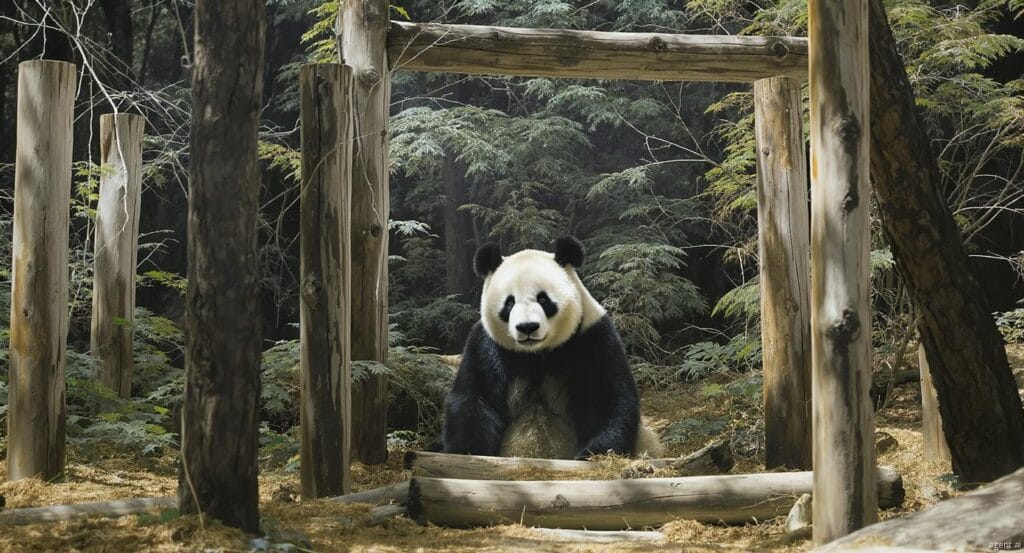
Giant Panda Conservation—How the World Saved Them
The giant panda conservation story is one of the world’s most successful wildlife recovery efforts.
China’s Conservation Programs
China has created:
- 60+ panda reserves
- Captive breeding centers
- Bamboo reforestation projects
- Anti-poaching laws
WWF’s Role
WWF adopted the Giant Panda as its symbol and helped:
- Create protected corridors
- Reconnect fragmented forests
- Develop breeding programs
For deeper insights, you can explore the WWF’s official conservation report.
International Collaboration
Many zoos worldwide host pandas under special agreements to support breeding and research programs.
Success Story
In 2016, giant pandas moved from “Endangered” to “Vulnerable.” Their population increased to around 1,864 individuals in the wild. While this is a big victory, their survival still depends on continuous effort.
11 Stunning Giant Panda Facts That Will Surprise You
- They have a pseudo-thumb to hold bamboo.
- Pandas sit upright like humans while eating.
- A newborn panda is the size of a stick of butter.
- Pandas can climb trees at just a few months old.
- They can eat for 14 hours straight.
- Their fur is oily to protect against the cold.
- Pandas communicate using 12+ different sounds.
- They spend 50–70% of their day eating.
- Cubs stay with their mothers for 18 months.
- A panda’s bite force is stronger than a lion’s.
- Pandas rarely drink water—they get it from bamboo.
These facts show how unique and important the Giant Panda truly is. You can learn more from the Smithsonian’s verified panda facts.
The Future of the Giant Panda—Hope or Risk?
Even though panda numbers are slowly increasing, the danger is not completely gone. Their survival still depends heavily on:
- Habitat protection
- Bamboo forest restoration
- Climate control
- Responsible eco-tourism
- Continued international cooperation
If these efforts continue, we may see giant pandas thrive again in the next few decades. But if human encroachment and climate change accelerate, all progress may be lost.
Also Read: Dog Trainer Warns: 5 Dog Breeds You Should Avoid | But Here’s the Twist!
How Climate Change Will Shape Panda Survival in the Next 50 Years
One of the main factors influencing the giant panda’s survival in the upcoming decades is predicted to be climate change. The areas where pandas can live are getting smaller as a result of rising temperatures pushing bamboo forests higher up the mountains. If this trend continues, over 35% of panda habitat may disappear in the next 50 years, according to ecological calculations.
Because pandas depend on bamboo for almost all of their nutrition, any climate-driven drop in bamboo availability directly affects their existence. In addition to changing breeding cycles, warmer weather may make it more difficult for other creatures to find colder habitats. Forest corridors and high-altitude bamboo plantation zones are examples of climate adaptation measures that conservation efforts must now incorporate to ensure a stable future for the giant panda.
The Role of Technology and AI in Future Panda Conservation
Technology is transforming conservation efforts. AI-powered camera traps now track panda movement and health automatically. Drones monitor remote forests without human intrusion, while genetic research is improving breeding success. As these tools advance, monitoring and protection will become more efficient and reliable.
Can Human Development and Panda Conservation Coexist?
Balancing human development with forest protection will remain a major challenge. Roads, farming, and construction reduce natural habitat, but new wildlife corridors are helping pandas move safely. Sustainable agriculture and ecotourism also give local communities financial benefits, reducing pressure on forest areas.
Why Global Awareness and Funding Will Decide Their Fate
Global support plays a critical role in future conservation. International funding, zoo partnerships, and awareness campaigns strengthen research and habitat protection. If financial support continues, long-term efforts can stay active. If awareness declines, conservation programs may weaken over time.
Could Pandas Become Fully Safe in the Wild?
Wild populations are slowly improving, but long-term safety still depends on stable forests, safe movement routes, and climate conditions. Pandas reproduce slowly, so recovery takes time. If their habitat remains protected, long-term stability in the wild is achievable but will require sustained effort.
Conclusion- Why We Must Protect the Giant Panda
The Giant Panda is more than just a cute animal. It is a keystone species whose presence maintains forest health, supports biodiversity, and symbolizes global conservation success. Understanding its habitat, diet, behavior, threats, and conservation needs helps us appreciate the challenges it faces.
Protecting the Giant Panda means protecting entire mountain ecosystems and thousands of other species that share its habitat. With continuous global support, the Giant Panda can remain a living treasure for future generations.
FAQ
- What do these animals eat the most?
They mainly rely on bamboo for daily nutrition. - Where do they naturally live?
They live in cool, dense mountain forests in China. - Why is their population still low?
They reproduce slowly and face habitat loss. - How long do they survive in the wild?
Most live around 18–20 years in natural conditions. - Do they prefer groups or solitude?
They usually live alone except during mating. - Can they climb and swim well?
Yes, they are skilled climbers and capable swimmers. - How often do they have offspring?
Typically, once every two years. - What threatens their natural home?
Deforestation, climate shifts, and human expansion. - How do conservation programs help them?
They protect forests, support breeding, and monitor health. - Are their numbers improving today?
Yes, their population is slowly increasing with protection.
Also Read: 10 Whale Facts That Will Truly Inspire You and 5 That Might Seriously Shock You