Introduction to the white Iberian Lynx
The white Iberian lynx is a remarkable wild cat species native to the Iberian Peninsula (Spain and Portugal). It is confined to this region, making it an endemic species.
What Makes the White Iberian Lynx So Special?
The white Iberian lynx (Lynx pardinus) is one of the rarest and most fascinating wild cats on Earth. Native exclusively to Spain and Portugal, this medium-sized feline is instantly recognizable for its spotted golden coat, tufted ears, and expressive face.
The Iberian lynx once faced near-extinction due to habitat loss and dwindling rabbit populations—its main prey. In 2002, fewer than 100 individuals remained. Thanks to intensive conservation, the population has rebounded to more than 2,000 lynxes by 2025, making it a global model for wildlife recovery.
The World’s First White Iberian Lynx—A Groundbreaking Discovery
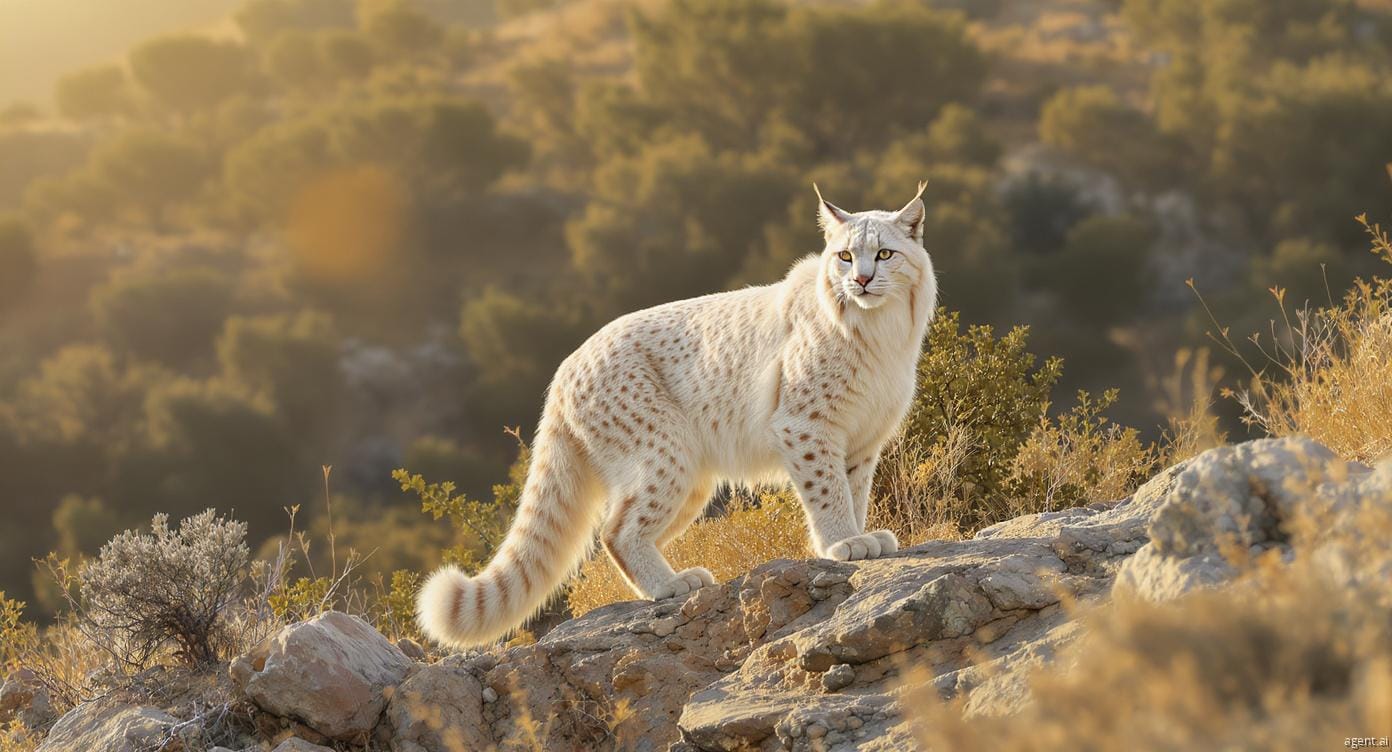
In October 2025, Spanish conservation cameras in Jaén, Andalusia, captured something extraordinary: a white Iberian lynx moving gracefully through the hills.
Leucism, a rare genetic trait that lightens fur color while maintaining normal eye pigmentation, was evident in this lynx, in contrast to albinism. A veritable genetic wonder, the animal appeared robust, alert, and utterly wild.
Experts from Spain’s conservation authority confirmed it could be the first recorded white Iberian lynx ever seen in the wild.
Understanding Leucism: Nature’s Genetic Surprise
Leucism occurs when a mutation reduces the number of pigment-producing cells, leaving the fur pale or white, but without the pink eyes typically associated with albinism.
- Leucism Albinism: In leucism, only fur color changes; vision and health remain normal.
- Why It Matters: This rare condition indicates that genetic diversity is thriving within the Iberian lynx population again.
In evolutionary terms, leucism doesn’t harm survival unless the pale fur reduces camouflage. In dense brushlands, the white lynx might stand out—yet its strong adaptability could offset this disadvantage.
Iberian Lynx Conservation: From Crisis to Comeback
📉 Near Extinction
By the early 2000s, habitat destruction and rabbit diseases had almost wiped out the species. Roads, illegal hunting, and forest loss added to the crisis.
🌱 Revival Through Science and Cooperation
Spain and Portugal launched the white Iberian Lynx Recovery Project, supported by the EU’s LIFE program.
Key actions included:
- Breeding lynxes in captivity and reintroducing them into protected areas.
- Restoring Mediterranean scrubland and rabbit populations.
- Creating wildlife corridors to connect isolated lynx groups.
- Community education and anti-poaching patrols.
📈 Present Success
The population jumped from fewer than 100 individuals to around 2,000 in 2025. The species moved from Critically Endangered to Vulnerable on the IUCN Red List—one of conservation’s greatest modern success stories.
🐾 Why the White Iberian Lynx Matters Globally – 10 Key Points
- Symbol of Global Conservation Success
The discovery of a white Iberian lynx shows how decades of international conservation work have helped recover one of the world’s most endangered cats—a model for saving other species. - Proof of Genetic Resilience
The rare leucistic Iberian lynx demonstrates that the species’ gene pool is strengthening. This indicates healthier diversity—a cornerstone of long-term survival for all wildlife populations. - Inspiration for Other Endangered Species Programs
The recovery of the Iberian lynx from fewer than 100 individuals to over 2,000 today inspires global conservation efforts, proving that targeted breeding and habitat protection can reverse extinction trends. - Advances Understanding of Leucism in Wild Cats
Scientists can study the white Iberian lynx to learn more about leucism—a rare genetic condition causing light fur coloration—and how it affects adaptation, camouflage, and reproduction in predators. - Ecological Indicator of Mediterranean Habitat Health
The Iberian lynx is an apex predator that reflects the balance of Mediterranean ecosystems. Its presence signals that rabbit populations, forests, and food chains are recovering. - Boost to Ecotourism and Local Economies
Responsible wildlife tourism around Iberian lynx reserves in Spain and Portugal creates jobs, educates visitors, and funds further conservation—showing how protecting nature supports sustainable development. - Encourages Ethical Media and Public Awareness
The viral attention surrounding the white Iberian lynx promotes global awareness about biodiversity, ethical reporting, and the importance of not disturbing wild animals for photos or fame. - Strengthens Cross-Border Collaboration
The Iberian lynx project unites Spain, Portugal, the EU, and global NGOs, a perfect example of how international cooperation can achieve conservation results that no single country could accomplish alone. - Educates About Human Impact on Wildlife
The story of the white Iberian lynx reminds the world how human actions, from hunting bans to habitat restoration, directly influence whether species vanish or thrive. - A Beacon of Hope in the Climate Crisis
Amid biodiversity loss and habitat change, the survival and genetic evolution of the Iberian lynx prove that with commitment, science, and compassion, humanity can still restore balance to nature.
The Habitat of the white Iberian Lynx
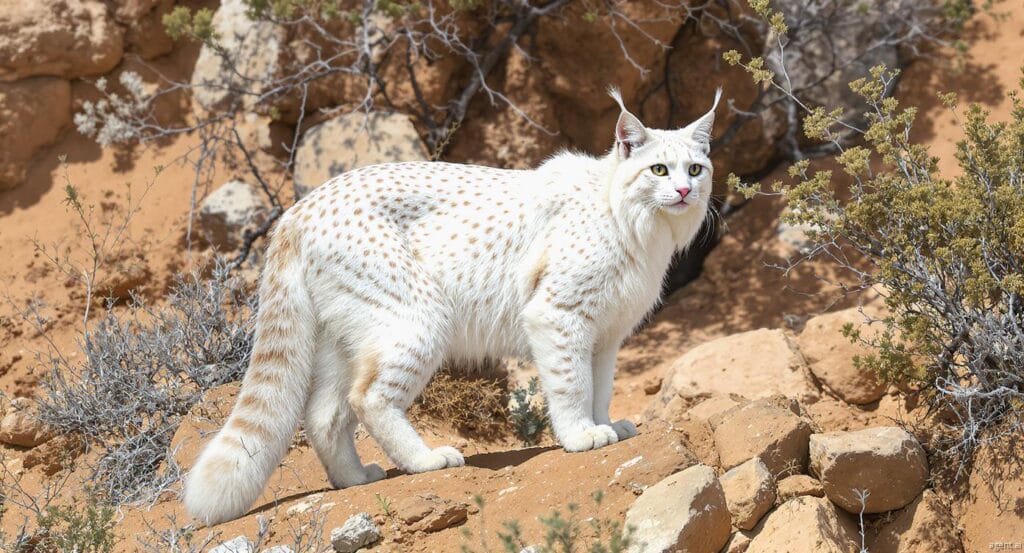
The Iberian lynx thrives in the rugged landscapes of the Iberian Peninsula, a region shaped by rolling hills, dense scrublands, and open oak forests. The newly sighted white Iberian lynx was photographed in southern Spain’s Jaén province, an area known for its mosaic of Mediterranean woodlands and rocky valleys that provide the ideal shelter, shade, and prey density the species depends on.
The Mediterranean Home of the Iberian Lynx
The core habitat of the white Iberian lynx is characterized by a warm, dry climate with mild winters and hot summers. Here, evergreen oaks, cistus shrubs, and rosemary bushes dominate the terrain, creating natural cover for stalking rabbits—the lynx’s primary prey. The mix of thick vegetation and open hunting zones allows the Iberian lynx to remain concealed while maintaining sightlines for ambush hunting.
Why Habitat Quality Matters
Habitat is the first step in any effective Iberian lynx conservation endeavor. The species needs an area that is peaceful, unaltered, and abundant in small mammals, especially wild European rabbits. The Iberian lynx almost became extinct in the 20th century when illness caused rabbit populations to plummet. Therefore, reestablishing rabbit colonies and planting native plants were essential to its recovery. The white Iberian lynx’s current existence indicates that these habitats have sufficiently recovered to support new individuals and maintain genetic variety.
Protected Reserves and Expansion Zones
Modern conservation networks, such as Doñana National Park, Sierra de Andújar, and Guadalmellato Reserve, serve as core breeding grounds for the Iberian lynx. These protected areas are carefully managed to prevent human disturbance, reduce road mortality, and encourage prey recovery. The white Iberian lynx was documented near one such protected corridor—proof that connected landscapes are helping the species spread naturally.
Climate Change and Future Challenges
It is even more important to maintain appropriate habitats for the White Iberian lynx as climatic trends change. The Mediterranean habitats that support rabbits and predators are under threat from an increase in droughts and wildfires. Potential northward habitat corridors are already being mapped by conservationists to aid the Iberian lynx in migrating and adapting to changing conditions.
A Living Symbol of Ecological Balance
The white Iberian lynx is not only a genetic rarity but also a visual reminder of the fragile beauty of Mediterranean nature. Its pale coat now contrasts vividly against the green and golden tones of its environment—an emblem of how restored habitats can nurture both diversity and resilience. Protecting these landscapes ensures that future generations will continue to witness the grace of the Iberian lynx in its rightful home.
The Iberian lynx thrives in Mediterranean woodlands, scrublands, and oak forests, primarily in Andalusia’s Sierra Morena and Doñana regions.
Also Read: Smart Pet Tech 2025: Powerful Gifts That Truly Care for Pets
Diet and Hunting Behavior of the White Iberian Lynx
The White Iberian lynx is one of nature’s most specialized hunters, finely adapted to the Mediterranean ecosystems of Spain and Portugal. The newly spotted white Iberian lynx follows the same instinct-driven patterns as its more traditionally colored relatives, relying on stealth, patience, and precision to survive in the wild.
The Iberian Lynx and Its Dependence on Rabbits
Nearly 90% of the Iberian lynx’s diet consists of rabbits, making them the main food source. Its behavior and choice of habitat are largely determined by its reliance on a single prey species. Like other species, the white Iberian lynx relies on robust rabbit populations to be energetic, procreate, and raise young.
The Iberian lynx has acute food shortages when rabbit populations fall because of illnesses like myxomatosis or rabbit hemorrhagic sickness, which frequently result in smaller litter sizes and greater mortality rates.
Hunting Strategy: Stealth and Surprise
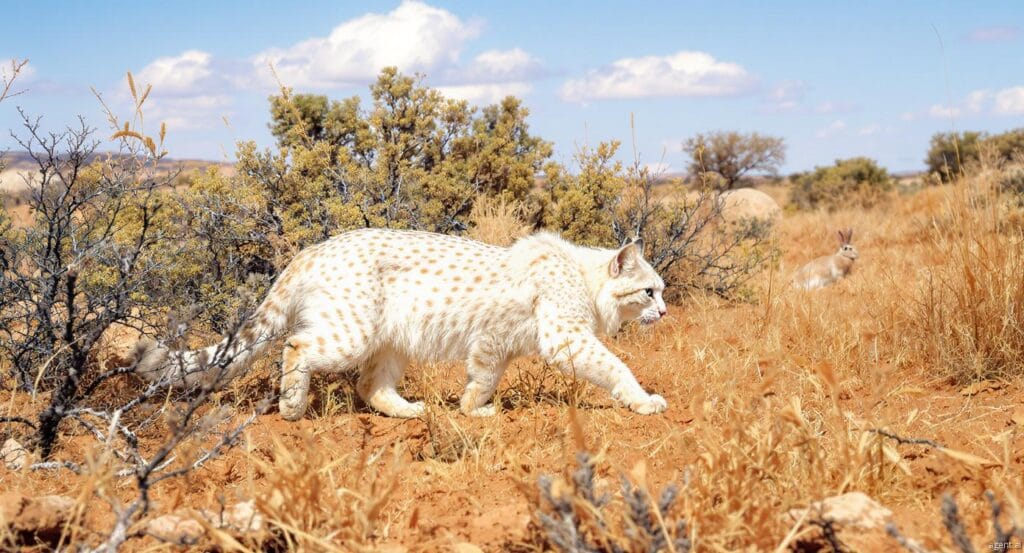
The Iberian lynx is a master ambusher. It uses dense shrubs, tall grass, and rocky ledges as cover, moving slowly and silently until it is within striking distance of its prey. With an explosive burst of power, it pounces on unsuspecting rabbits, using its sharp claws and strong jaws to deliver a quick, precise kill.
Even the white Iberian lynx, whose lighter coat might seem disadvantageous in darker terrain, demonstrates remarkable stealth and adaptability—its fur blending well with lighter scrub or sunlit landscapes. This adaptability showcases the lynx’s ability to thrive even when its appearance is genetically unique.
Seasonal Diet Variations
While rabbits remain the primary prey, the Iberian lynx diet can broaden seasonally. In years when rabbit numbers drop, it hunts small mammals, partridges, and even young deer. However, these are temporary alternatives. Long-term conservation of the Iberian lynx depends on restoring and sustaining wild rabbit populations in their native range.
Solitary Hunters and Territorial Behavior
Each adult Iberian lynx maintains a defined territory—males often ranging across 10–20 square kilometers, while females occupy smaller home ranges. Territories overlap slightly, particularly during the breeding season, but the species remains largely solitary. The white Iberian lynx, like others, marks its range with scent and visual cues, helping maintain balance and reduce conflict within populations.
How Hunting Reflects Conservation Success
The very act of hunting by the Iberian lynx—especially in regions where it was once extinct—demonstrates the success of reintroduction and habitat restoration programs. The appearance of the white Iberian lynx confirms that not only is the species reproducing successfully, but individuals are healthy and behaving naturally within stable food webs.
The Future of Iberian Lynx Conservation
Even with this success, challenges remain:
- Habitat fragmentation from roads and urban growth.
- Rabbit population declines due to viral diseases.
- Climate change, threatening prey and vegetation.
- Human–wildlife conflict, especially near farmland.
Ongoing monitoring, habitat restoration, and genetic diversity studies are crucial to sustain progress.
FAQs About the Iberian Lynx
Q1: Where can you find the Iberian lynx today?
Mostly in southern Spain (Andalusia, Extremadura) and some parts of Portugal.
Q2: What’s the difference between the Iberian lynx and the Eurasian lynx?
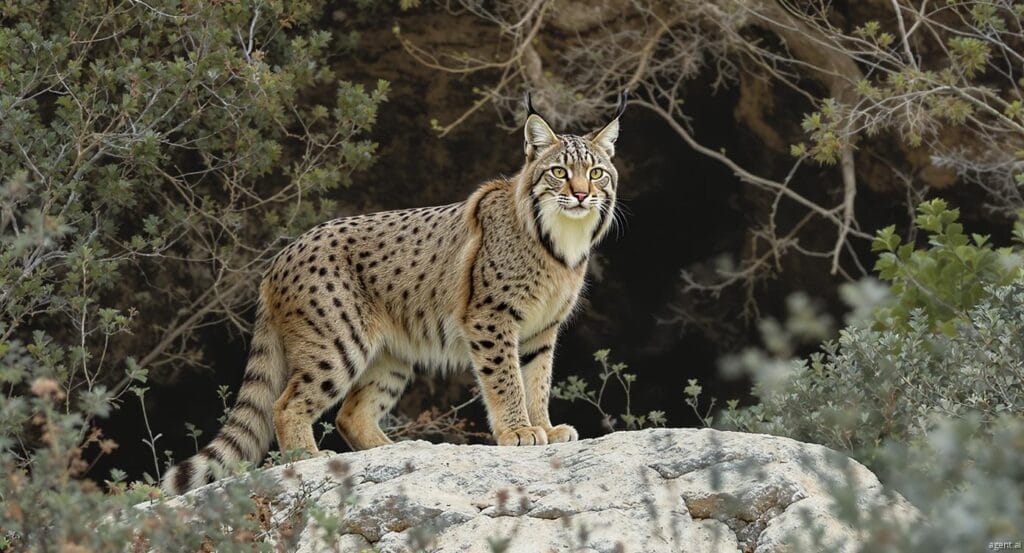
The Iberian lynx is smaller, with shorter fur and more distinct spotting. The Eurasian lynx ranges across Europe and Asia.
Q3: Is the white Iberian lynx an albino?
No. It’s leucistic, meaning its fur lacks pigment, but its eyes remain normal.
Q4: How many Iberian lynxes exist now?
As of 2025, there are around 2,000 individuals, a major rebound from near-extinction.
Q5: Why is the Iberian lynx important for the ecosystem?
It keeps rabbit populations balanced, supporting biodiversity across Mediterranean forests.
Conclusion: A Symbol of Nature’s Resilience
The white Iberian lynx isn’t just a viral sensation—it’s proof that conservation works. Once on the brink of extinction, this feline now represents hope, diversity, and the rebirth of a once-fragile ecosystem.
Protecting the Iberian lynx means protecting an entire web of Mediterranean life—forests, prey, and future generations of wildlife.
With continued support, we may see not just one white lynx, but a thriving legacy of wild cats reclaiming their rightful place in Europe’s wilderness.